TL;DR
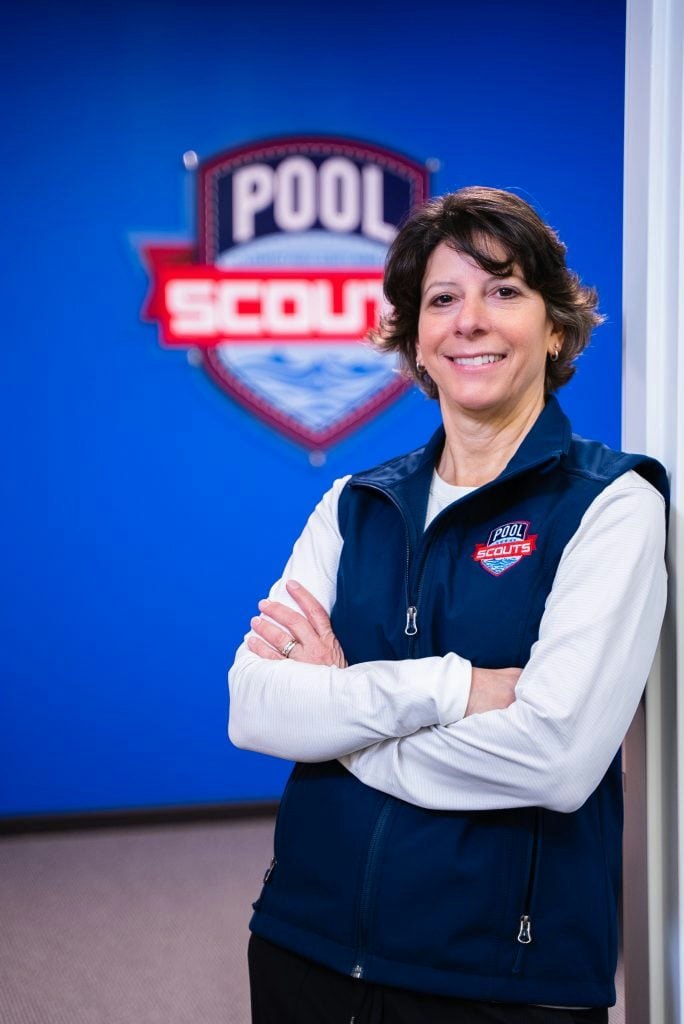
Tiffiny Consoli, the first franchisee of Pool Scouts, shares her experience building a successful business and collaborating with the company to refine its system. Consoli's background in retail management helped her transition into franchising, where she found a supportive brand and system in Pool Scouts.
TC: Prior to starting my own business, I spent 13 years in retail as a store manager, so I already felt like I was running my own store. I managed employees. I managed inventory. I managed a budget. I interacted face-to-face with customers. Retail’s a dynamic space where there’s a lot going on and a lot of different factors to consider. My experience there made me feel like I could make the transition into something of my own, which was something I’d always wanted to do and had a passion for.
I was burnt out of the weekends and the nights and the holidays in retail, and something started burning inside of me. I really wanted to do something where I could own my time, and I felt strongly like I could be successful.
The thing was, I didn’t have something that I knew I definitely wanted to do. I wasn’t someone who baked cookies for fun and then asked, “How can I make this into a business?”
That led me to franchising. I liked the idea of having a brand and a support structure and a product to deliver. Those were the parts of business planning that were outside of my expertise and, frankly, comfort zone. I also take pride in being a team player – that’s something I brought with me from retail. I know how to build and manage a team, and I also know how to provide feedback that can help the system improve performance at other locations. It felt like franchising was a space where I could have my own business and be part of something bigger.
When I started researching brands and discovered Pool Scouts, I liked that it was outdoors and semi-seasonal, with the opportunity to recharge in thew inter. I felt like Pool Scouts was building a differentiated brand in the industry with great support, and I felt a strong connection with the people there. I trusted their approach from a marketing standpoint, and I felt like they would have my back.
TC: If you’re like me and starting a franchise in an industry you don’t have a deep background in, you need to start building relationships fast. Embrace learning through others. Get to know people in the industry, and don’t be afraid to ask questions. Hire people with experience and dedicate yourself to learning from them.
You need to be focused on a commitment to service. It starts with hiring great people and delivering great services, and you absolutely need to focus on generating good reviews, because that is what really helps grow the business. You also need to get yourself out there through chambers of commerce and keep marketing and forging connections wherever you can.
I don’t think I knew how hard it would be the first few years. I thought I was just going to go out there and clean some pools with a vacuum and brush and everything would turn out blue and clear. But I learned it’s not that way and that every backyard is different.
Luckily, I had the support of a franchise system during those tough times. Being their first franchisee, we were actively collaborating a lot to figure out how we could streamline our processes and become successful more quickly.
I also think it’s important to be open-minded about where the journey is going to take you. I didn’t get into this planning to be heavily involved in the repair side of the business, but that’s actually turned out to be a great opportunity for us, even though it wasn’t part of my original vision for what I was going to do.
All those things work together: relationships, a vision, setting goals, building a great team, customer service, and getting good reviews.
TC: That transition didn’t happen for me as quickly as I think it does for some other business owners, but that’s because I’ve been deeply invested in the success of my business, and I found it tough to give up the reins. By that seven- or eight-year mark, though, the everyday grind started to get a little more difficult for me, and the business had outgrown the point where it was advisable for me to try and do everything, both in terms of our customer base and the size of our team.
Now, we have a team of three managers reporting to a general manager: a service manager, a repair manager, and an office manager.
In hindsight, we did a really great job of building a strong culture early on and putting together a great team, many of whom stayed with us as we grew. Sterling, our service manager, started as a pool cleaning helper, and he’s grown into handling basically the entire service side of the business. Our general manager used to be a teacher who came to us as a part-time office assistant for the summers. She grew from assistant to office manager and now general manager.
So, it made it a lot easier for me to make the transition knowing that the daily work was in the hands of people I trusted and had grown with. At this point, it’s my job to help continue the culture and help us make bigger decisions. They’re doing a great job.
TC: I got some advice early on that you always need a backup plan – an extra vacuum, an extra blower, an extra vehicle. I really didn’t want to get into a situation where we were growing a customer base but didn’t have the tools or the resources to serve them. And I always wanted to be able to bring on the next customer; I never wanted to tell someone no.
Ultimately, we did a good job of staying ahead of where we were just enough. We invested in hiring a repair manager a few seasons before we maybe needed one, but I knew we absolutely had to have one to take the next step forward the following year, and it was key to get the right person on the team while they were available.
It’s not about today or tomorrow; I’m always thinking about how things are going to look by end-of-year, or how things will be next year.
TC: I think you have to believe in yourself and believe that you can be successful. There’s a certain amount of resilience and tenacity that are required as well. From the beginning, I was determined for this to work. Once I had made this investment in my franchise and this company, it could not fail.
Even though Pool Scouts had an approach that had been a success and was there to support me, I had to be successful in my own mind. That really drove me and helped me overcome some challenging times. You really have to believe in yourself and your vision and your ability to get there.
I always found courage in knowing I had a good territory where our services were needed, and as long as we grew consistently year-over-year, I felt good about making whatever investment was going to help us take the next step forward.
TC: I’m excited to be more of a CEO and having that GM in place so I can take a bigger-picture view and really think about the business on a higher level. When you’re not so deeply embedded in the business, it can be easier to see where the opportunities are to grow or save money.
I’m also excited to be providing opportunities for people to work in a time where technology and AI are changing the workforce. One of the things I think is really cool about our space is that we can use AI to help us balance chemicals or embrace automations that support our team, but there’s always going to be a human service component in this work. I am happy to be in a space where we’re doing work that requires a real human body. AI can’t do it for us.
In this story
This story was originally published by David Gibb in Franchise Magazine USA on October 19, 2026. Burnaze summarizes and links to the original reporting.
Read the full story at Franchise Magazine USALiked this? Get the week's franchise news, explained
- Sunday 8 AM ET weekly + a monthly deep dive
- Sections picked for the industries you follow
- Every claim linked to its source. Free.