TL;DR
El Pollo Loco reported a 5.8% increase in same-store sales and a 27.3% surge in adjusted earnings per share, driven by menu innovation and improved unit economics. The company's CEO, Liz Williams, attributes the success to a focus on quality, value, and convenience, as well as a strong pipeline of new menu items.
El Pollo Loco CEO Liz Williams couldn’t get too deep in the weeds during a recent interview at the Restaurant Leadership Conference in Arizona because it was just a couple of weeks before her company’s first quarter earnings report and she was in a quiet period.
Despite adhering to such regulatory restrictions, one still got the sense that Williams was jubilant.
Now we know why.
Financial performance
El Pollo Loco blew past Q1 expectations, reporting last week a 5.8% increase in same-store sales, a 27.3% surge in adjusted earnings per share, and a 320 basis point expansion in restaurant contribution margin to 19.2%, the higher end of Williams’ margin goal put into place when she laid out a three-year turnaround plan shortly after coming on board in 2024.
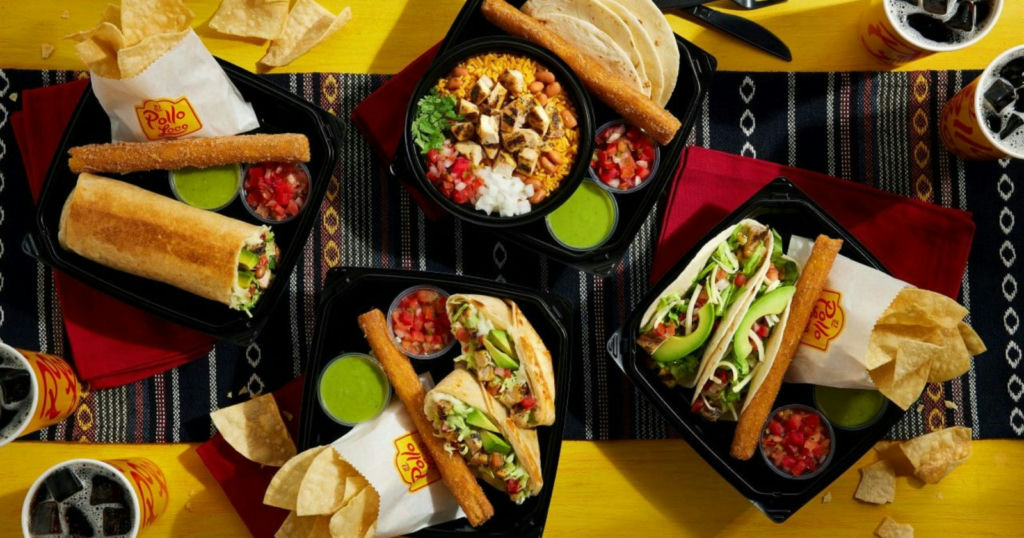
One of the biggest parts of that plan has been a step-up in menu innovation, including on the value side. In the first quarter, for instance, El Pollo Loco’s new Double Pollo Salads and Baja Double Tostados peaked at over 20% of the total sales mix.
“I firmly believe you have to have to have a (bigger) pipeline. You can’t just keep running past plays, and you can’t just show up and scream ‘value,’ it has to be part of your DNA,” Williams said. “What we’re giving consumers is what they want, like Mango Habanero (introduced last year). It’s a great price point and it’s something they love, they crave, and an everyday price point they can afford.”
In April, El Pollo Loco introduced Loco Tenders, which not only allows the chain to “give consumers what they want” (and plenty of consumers are demanding tenders these days) but also expand its consumer base to new and younger guests. El Pollo Loco has historically been a grilled chicken brand, but Williams didn’t want to be constrained as the chicken category continues to intensify.
“Our DNA is quality, so why can't we bring that quality to something that everyone loves, which is fried chicken tenders?” she said. “There’s a lot of tenders out there that aren’t really good and aren’t really quality, so we’re bringing tenders in our own way — high quality, great value.”
Tenders, she added, are now “destinational” for consumers. And, in test, El Pollo Loco also found that they drive return visits and tend to include add-ons, bolstering checks.
This is just the tip of the iceberg on the innovation work the company is doing. The company is experimenting with more sauces and testing a crispy grilled chicken sandwich and beverages such as Horchata iced coffee.
“Our food hasn’t historically been as portable as it needs to be, so that is a new category for us,” Williams said, adding that the company also has new bowls and loaded quesadillas.
Innovation strategy
To support this innovation work, El Pollo Loco recently added a culinary kitchen in its Costa Mesa, Calif., support center. As it ramps up new offerings, the company is also focused on rising above a noisy value environment by making sure it has the right mix of price, quality, convenience and experience.
“Value does not have to be low price points. It can be a salad with a double portion of chicken at $12 that compares with a fast casual or casual dining concept that has a $15 to $18 salad with double protein. Value now has so many permutations to it. It used to be an LTO that you splashed on the window. Now you can orient value to different consumers in different places, like their phone or delivery, with different deals. Value now is an equation,” Williams said.
Williams acknowledges that a wider value aperture can risk complicating operations, but El Pollo Loco has also pushed hard to improve its performance across metrics. During the company’s Q1 call, executives reported that scores are up across every key metric, including accuracy, quality, friendliness, cleanliness and speed.
“When we did this research, we heard from consumers that their experience was more varied than we would like it to be and that the quality of the food wasn’t consistent and so we’ve focused on getting standards back and simplifying,” Williams said. “We had so many things we were complicating for team members, so we started doing things as simple as writing the name of a product in a more intuitive way to make it easier for them.”
These changes are strengthening the company’s foundation as it aspires to grow into new markets and, eventually, nationally. That growth, however, wouldn’t be feasible without stronger unit economics, and the improvement here is what puts the most spring in Williams’ step.
“I’m a big believer that as you grow a brand, especially with franchisee partners, you have to have both economics and enthusiasm,” she said. “We have that enthusiasm. You can hear it in my voice. The economics had to play catch up and so I’m really proud of how we have and will continue to move that needle.”
Members help make our journalism possible. Become a Restaurant Business member today and unlock exclusive benefits, including unlimited access to all of our content. Sign up here.
In this story
This story was originally published in Restaurant Business on May 12, 2026. Burnaze summarizes and links to the original reporting.
Read the full story at Restaurant BusinessLiked this? Get the week's franchise news, explained
- Sunday 8 AM ET weekly + a monthly deep dive
- Sections picked for the industries you follow
- Every claim linked to its source. Free.