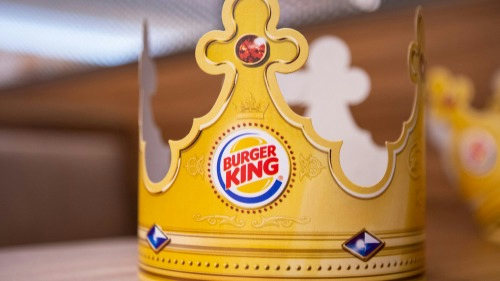
Burger King delivered the strongest comparable-sales growth across Restaurant Brands International's major brands in the third quarter, as value offers, marketing and menu innovation helped attract diners amid a challenging restaurant environment, the company said in its Q3 2026 earnings report.
U.S. comparable sales at Burger King increased 8.4% for the quarter ended Sept. 30, compared with 3.2% growth a year earlier. Globally, the brand's comparable sales rose 8.3%, while adjusted operating income increased 10.6% to $136 million. Revenue grew 2.3% to $396 million, with the impact of higher comparable sales partly offset by refranchising.
Brand performance
During the quarter, Burger King surpassed 13,000 restaurants outside the U.S. and Canada, while Popeyes crossed 2,000. "These are meaningful milestones for both brands, but we are still in the early stages of realizing our full global potential. As our system grows, our increasing scale gives us more opportunities to share ideas, capabilities, and operational expertise across our markets," Restaurant Brands International CEO Josh Kobza said during the Q3 earnings call.
Burger King continues to execute its multiyear "Reclaim the Flame" initiative, which includes up to $700 million in investments through 2028 for advertising, digital capabilities, restaurant remodels, technology and kitchen upgrades. As of Sept. 30, RBI had funded $198 million of the up to $550 million planned for its Royal Reset restaurant investment program.
"After an awesome first half of the year, we accelerated our outperformance in the third quarter with U.S. same-store sales up 8.
4% and system-wide sales up 7.5%. We widened our gap to Burger QSR peers to nearly 10 points, and after years of hard work, we are incredibly proud to have reclaimed the number 2 position in the U.
S. burger category," Kobza said during the call. "Our convention in Miami this month gave us a chance to come together and celebrate that progress.
What stood out to me was how determined our team and our franchisees are to keep pushing forward. There's no appetite for a victory lap or complacency. We still see lots of opportunities in front of us, and we're very focused on capturing them."
Overall, RBI reported third-quarter revenue of $2.53 billion, up 3.1% year over year. Adjusted operating income increased 6.7% organically to $737 million, while adjusted diluted earnings per share rose 6.9% to $1.10. Net income from continuing operations climbed to $704 million, up from $440 million a year earlier, largely reflecting a tax benefit associated with intra-group reorganizations.
Popeyes struggles
Popeyes remained a weak spot in RBI's third-quarter results, as declining comparable sales and rising expenses weighed on profitability.
Global comparable sales fell 1.8%, compared with a 2.4% decline in the year-ago quarter. U.S. comparable sales dropped 2.2%, worsening from a 2% decline a year earlier. For the first nine months of 2026, global comp sales were down 4.5%, while U.S. comp sales declined 4.6%, indicating that the brand's sales challenges extend beyond a single quarter.
Popeyes' systemwide sales slipped 1% to $1.503 billion, down from $1.519 billion a year earlier. Revenue, however, increased 1.5% to $204 million, up from $201 million. The increase is primarily because of higher company restaurant sales from locations acquired during the period. That increase was partially offset by lower advertising revenue and other services, mainly due to reduced contributions to advertising funds.
Popeyes improved year-over-year service satisfaction in each of the first three quarters of 2026, leading the chicken category with record-high satisfaction for its core chicken product and gains in perceived value and food quality. Traffic trends also strengthened sequentially. However, Kobza said, sales were pressured by weaker-than-expected incremental results from the $6 Big Box promotion in September and a deliberate reduction in wing offerings to simplify operations and refocus on bone-in chicken, tenders and sandwiches.
"Given these dynamics, while we previously expected to return to positive same-store sales in the second half of this year, we now believe it will take a little bit longer than anticipated. We're not satisfied with our top-line results, but the progress we're seeing across our key focus areas, everyday value, operational execution, and product satisfaction give me confidence that Peter and his team are making the right decisions to strengthen the underlying business and position Popeyes for sustainable growth," he said during the call.
The pressure on profitability has persisted for Popeyes throughout the year. For the first nine months, Popeyes' revenue declined to $593 million, down from $605 million, while adjusted operating income dropped to $177 million from $188 million. Systemwide sales fell to $4.453 billion from $4.571 billion over the same period.
The company's quarterly results did not identify a specific operational or menu initiative as the cause of Popeyes' sales decline.
Other brands and segments
Tim Hortons posted 1.5% comparable-sales growth, down from 4.2% in the prior-year quarter. Adjusted operating income increased 4.2% to $317 million, supported in part by tariff refunds and higher systemwide sales. In Canada, comparable sales rose 1.8%.
Firehouse Subs recorded 1.5% comparable-sales growth, while adjusted operating income increased 11.1% to $16 million. Systemwide sales grew 8.3%, driven primarily by net restaurant growth of 7.8%.
RBI's International segment also contributed to grow, with comparable sales increasing 3.9% and systemwide sales rising 9% on a constant-currency basis. Adjusted operating income climbed 8.9% to $205 million, supported by higher royalty revenue from Burger King and Popeyes restaurants, as well as the resumption of Burger King China royalty revenue.
Meanwhile, Restaurant Holdings, which includes company-operated restaurants acquired through RBI's Carrols and Popeyes China acquisitions, reported revenue of $487 million, up 6.2%. Adjusted operating income fell 46.6% to $5 million amid higher restaurant and compensation costs and investments in the Popeyes China and Firehouse Subs Brazil businesses.
RBI reaffirmed its full-year 2026 outlook, remaining on track for approximately 8% organic adjusted operating income growth. The company also said it had returned approximately $1.3 billion to shareholders through dividends and share repurchases during the first nine months of the year.
This story was originally published in QSR Web on October 29, 2026. Burnaze summarizes and links to the original reporting.
Read the full story at QSR WebLiked this? Get the week's franchise news, explained
- Sunday 8 AM ET weekly + a monthly deep dive
- Sections picked for the industries you follow
- Every claim linked to its source. Free.