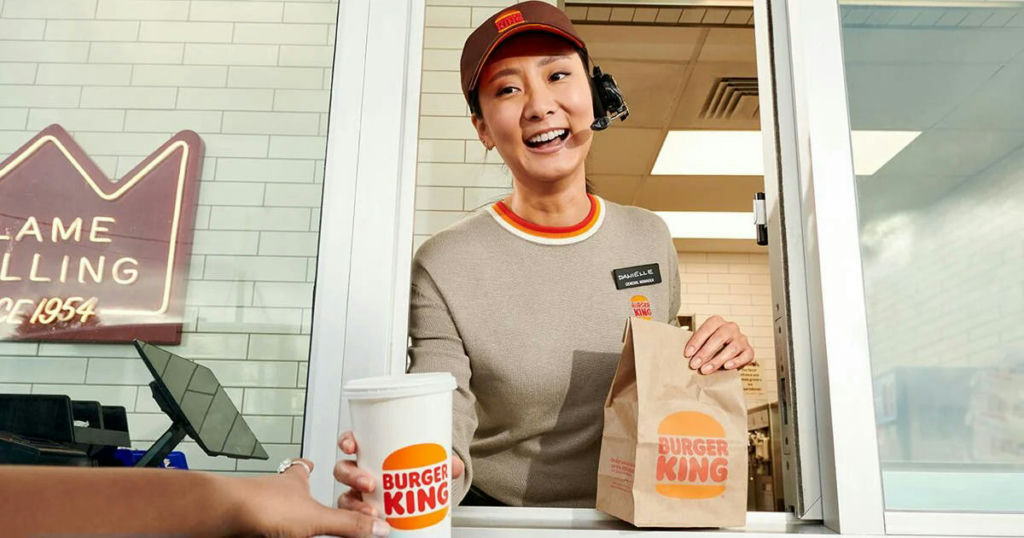
As Burger King nears 20,000 locations globally, the fast-food burger chain is honing in on strategic talent acquisition and retention strategies.
Earlier this year, Burger King unveiled an ad campaign crowning guests with a new tagline: “There’s a New King, and It’s You.”
This people-first focus extends to the people operating Burger King stores day in and day out, said Nico Henrich, chief operating officer at Burger King U.S. and Canada.
“There’s a big tension out there about [how] technology is making our industry cold: The hospitality and heart is coming out, and the robots are coming in,” Henrich said. “But the hospitality and the humanity of the business has to remain in order for us to continue to succeed as an industry.”
Henrich spoke alongside Betsy Mercado, chief people officer at Jersey Mike’s, during a panel on successful talent, labor and human capital strategies in the restaurant industry at the Restaurant Finance & Development Conference November 10 in Las Vegas. Sarah Lockyer, chief brand officer at The Elliot Group, and Harri founder and CEO Luke Fryer moderated the panel.
Stronger talent procures stronger returns, and Burger King’s recent sales reflect this. The quick-service burger chain reported 7.6 percent global sales growth and an 8.4 percent increase in U.S. same-store sales in the third quarter of 2026.
Amid the company’s “Reclaim the Flame” initiative, Burger King saw systemwide sales and unit growth increases of 5.9 percent and 0.9 percent, respectively, according to Franchise Times Top 400 data. The company is refranchising hundreds of corporate-owned stores as it inches closer to 20,000 global locations.
Many of those stores are landing in the hands of first-time operators, Henrich said.
At the Restaurant Finance & Development Conference November 10, Betsy Mercado and Nico Henrich talked talent, labor and culture strategies in a panel moderated by Luke Fryer of Harri and Sarah Lockyer of The Elliot Group.
Burger King is guiding those franchisees through a three-year process where operators are expected to hit certain milestones, operational outcomes, guest satisfaction and profitability metrics. Part of that process entails having franchisees introduce their mission and values to their teams.
Implementing and maintaining culture and values across an entire system, however, takes patience.
“You’ve probably seen moments of drift in your brand and in your restaurant system, and Burger King is no exception to that,” Henrich said. “It’s hard to measure the quality of talent; it’s hard to measure the quality of leadership. But if you stick to it consistently over time, your leaders will ensure that the culture expels the bad behaviors and rejects the decisions that don’t align with those values—but it certainly takes time.”
Similarly, Jersey Mike’s expects its operators to be in lockstep with the brand’s mission, vision and values.
Mercado said the average tenure of a Jersey Mike’s franchisee is 15 years, so the deep brand knowledge and experience bakes those values into the franchise system, which then trickle down to staff at the store level.
The brand has “crystallized” those values in the last year by getting them on paper and in front of franchisees and corporate team members, Mercado continued, “so that we had something to rally around.”
It appears to be paying off as Jersey Mike’s continues its hot streak despite the sandwich segment’s stale performance. (Sandwich franchises reported a 0.8 percent sales dip in 2025, according to Franchise Times Top 400 data.)
The sandwich chain kicked off last year with Blackstone’s acquisition and ended it with 13 percent year-over-year sales growth, in addition to netting 254 units, up 8.5 percent.
2026 seems to be faring the same as Jersey Mike’s builds off a historic $1 billion restaurant IPO in July.
While it’s still “a work in progress” at Jersey Mike’s, Mercado believes aligning with strong operators who act as local-level liaisons and brand representatives “can ensure a higher degree of success in making sure we’re hiring people who demonstrate those [values] every day in our restaurants.”
She equally stressed the importance of acknowledging team members’ needs.
“As we think about hiring—not just in restaurant staff, but folks for our corporate office—this idea of long-term incentive is so much more meaningfully important now than I’ve ever seen,” she said. “Even annual total cash compensation, I think it’s linked to people wanting to feel a little bit secure when things outside of their control make them feel slightly insecure.”
Henrich echoed those sentiments and shared how direct franchisee feedback helped enhance Burger King’s operational standards.
“One big point of feedback that we’ve gotten from our greatest operators is you definitely need to attract the best talent, but you also need to have a machine that can develop the best talent,” he said. “‘You need both praise and accountability’ was also a big one that our operators helped us co-author into our operating plan.
“The style which you employ praise and accountability matters too: Praise in public and hold people accountable in private, and do it in a coaching and constructive way. It’ll go a long way,” Henrich advised. “If you’re paying attention, if you’re doing the work, you will find what aspects in the company are preventing your culture from being what you want it to be.”
The Restaurant Finance & Development Conference, put on by Franchise Times’ sibling publication Restaurant Finance Monitor, runs November 9-11 at the Wynn hotel in Las Vegas.
This story was originally published in Franchise Times on November 11, 2026. Burnaze summarizes and links to the original reporting.
Read the full story at Franchise TimesLiked this? Get the week's franchise news, explained
- Sunday 8 AM ET weekly + a monthly deep dive
- Sections picked for the industries you follow
- Every claim linked to its source. Free.