TL;DR
Poké House founder James Deng discusses his vision for the brand and franchise system, focusing on customer experience and supply chain control. The company aims to be the best poké brand in the US, with a mission of quality, quantity, and customer service.
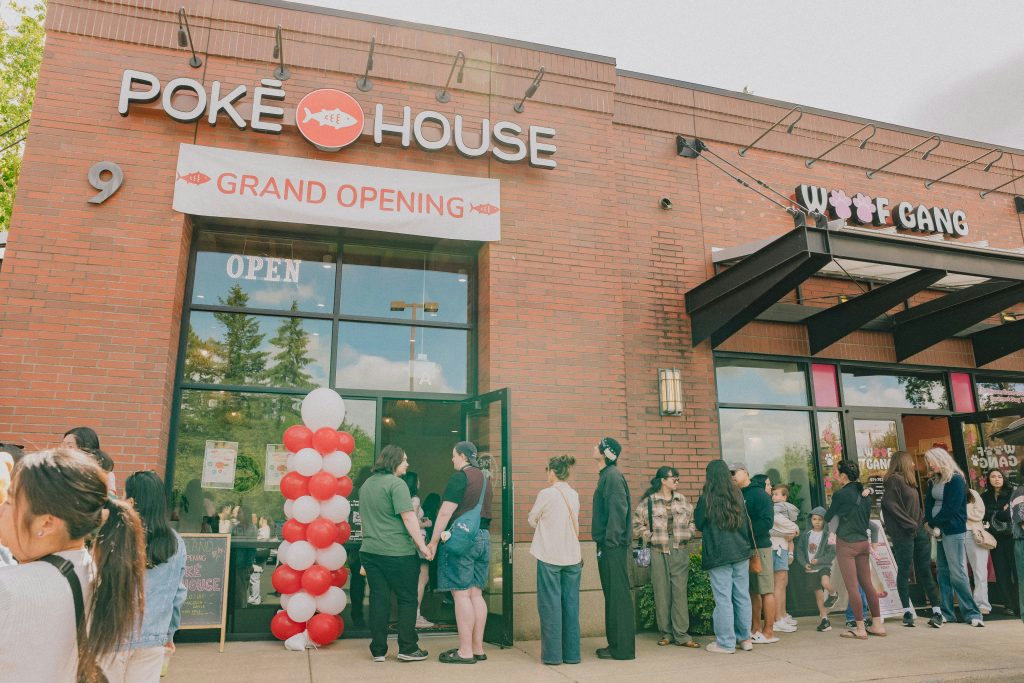
James Deng founded Poké House in 2015 with a vision of bringing fresh, healthy Hawaiian poké to the market with a California twist. While he comes from a tech background professionally, James grew up doing his homework in the back of his parents’ restaurant. Over the last decade, he’s developed Poké House’s brand and franchise system with a focus on providing franchisees with a great experience and value that they can pass along to create loyal customers.
Market trends
We’re beginning to see a really big shift in the restaurant space. The middle section of restaurants, meaning the mom-and-pop restaurants, are getting eaten alive. You have to go either high-end or QSR and scale to make it in the U.S. because of the regulations, the costs of products, the rising oil prices. So, it’s really eating away at a lot of margins in the middle.
QSR is having a moment because we’re able to scale and get better prices and better products for the buying power that we have and then provide the customer with a better experience in terms of quality and value. Another thing is we’re able to scale our technology. Technology is gigantic in the space right now with AI and ability to get better contracts with these SaaS products.
Nowadays, our sales are close to fifty percent online. Some of our stores are between thirty-five to seventy-five percent online sales. By leveraging scale, you’re able to get better commissions which is a gigantic savings.
So right now, QSR is doing well compared to other kinds of restaurants. I think we’re in a good space in terms of quality and health as more people try to be healthier and more fit.
We want to be the best poké brand/East Asian brand in the US. There’s a huge opportunity for this kind of food at the national level. Outside of maybe Panda Express, there’s no large East Asian chain. We want to be that piece that fits in to complete the puzzle.
Mission and values
Our mission is QQC: quality, quantity, and customer service. Obviously the quality of the food is key. Quantity means we want to control the supply chain so we could get the best prices for our customers, meaning both the franchisees and their customer base.
Getting great value from the money the customer is spending is huge nowadays because everything’s getting more expensive. When a private equity company buys out a QSR brand, the first thing they do is they lower the volume and make the product smaller and smaller, and then you have an exodus of your loyal customer base. Quantity is important. We want the customer to feel full every time.
And finally, it’s the customer service. And, with QSR it’s a little bit less important compared to sit-down restaurants, but it is still extremely important. It’s definitely in the top three things that we aim for when we have customers walk in, and customer experience is the number one thing we train our team on.
So, mission-oriented means that we are evaluating suppliers, developing technology, training franchises, and trying to deliver a great guest experience to our customers.
Honestly, great brands aren’t built one restaurant at a time. They’re built one customer experience at a time.
I think if you have a great mission statement, and you know exactly what you’re targeting, it creates margins.
We’re a very focused QSR brand. We sell, really, two products. We sell tuna and salmon. And that is eighty percent of our sales. Eighty percent of our sales is just two products, and we try to make the business very simple. But what that means is we have to be focused heavily on the supply chain for those products.
I own my own supply chain. I own distribution. We have our own freezers. We have our own drivers and trucks, and we service all our franchise locations and corporate stores directly. That helps us with our margin. We’re able to undercut Sysco and US Foods and a lot of the bigger guys because we have our own integrated supply chain. So, our mission then creates the margins.
Franchisee success
We have a lot of franchisees who come from corporate backgrounds who are just getting started out, but we also have a lot of franchisees who’ve had other businesses before. Regardless of which they are, the number one thing I see that makes a great franchise is the ability to be coachable.
It’s also key that people have a willingness to follow our proven system. We’ve built this business model through ten years of experimentation, tinkering, and fine-tuning. We’ve had a few franchisees who’ve been a little less coachable or really feel like they need to do their own thing, and frankly, those are the stores that do the least well. If you don’t use the systems that have been built, you’re basically deviating from the business model.
Good franchisees are also good leaders. With that said, a lot of them don’t start out with that leadership experience; but good learners develop and gain more confidence as they go. You don’t necessarily need to have those abilities when you’re first thinking about getting into the system, but the desire to learn and grow in that way is gigantic.
Finally, a great franchisee cares about the culture. They want to be part of the brand. They’re not just in it for the money – even though that’s obviously part of the motivation. I look at brands like Firehouse Subs or Jersey Mike’s or Chik-fil-A who’ve built a culture that really jives with the people, and I’m looking for franchisees who can help Poké House execute that. If I can’t see you being part of a team like that, it’s hard to allocate you a franchise.
I truly believe working with a franchisee is a partnership. It’s not a transaction. We work together super closely. They’re like family to us. We meet all the time. We grab lunch or dinner just to catch up. Especially being a founder-led business, it’s really personal to me when we do onboard franchisees and corporate units because every unit is a representative of how long we’ve worked at the brand.
We actually do a white glove service that runs from when a new franchisee signs the franchise agreement until after they’re open.
We help you a site select. I fly out to every single location with the franchisee. As an owner/founder I want to be a part of making sure your first location, and all your locations are successful, but especially your first.
Number two is we help you with lease negotiations. We review the lease with you, review the LOIs. We have a dedicated project manager to help you with restaurant design, construction guidance, and equipment purchasing.
And we have a team of trainers that’ll fly out for a month to train your whole team. We’re there for a whole month before you open, during the soft opening process, and after your grand opening to make sure that your entire team is trained to spec. So, when we do leave, you guys are properly supported.
And on top of that, we’re in the Bay Area, and we are very technology focused. Every single system is very integrated into the development and the operations of the store. That means up-to-the-minute web app online ordering systems, integrated payroll, checklist systems, and cost management systems. We have an app for ordering through our vendors as well as our central warehouse. We want to make sure that the franchisees have the tools to operate the store without having to go into like the swamps.
And then we also help with marketing, purchasing, and supply chain, business reviews, and more. We have all that integrated.
We also provide ongoing coaching. In the beginning, it’s weekly meetings, then monthly, and then quarterly meetings with our account executives to go over KPIs, COGS, marketing incentives, and so on. It’s a white glove service all the way through.
Growth strategy
We are growing quite exponentially. We’re actually doubling in size in the next year. But we’re focused on sustained growth because, growth is great, but we don’t want to grow into areas where it’s not sustainable.
For example, we got offered a Times Square location in New York City, and the mathematics just didn’t make sense from a development standpoint. It would’ve been our only unit in New York, and then we don’t have supply chain support of that area. So, we’d need to grow regionally first to really make that work. The ability to support the locations and franchisees, that’s really our guiding light.
We want to grow into a great restaurant chain, and a great restaurant chain doesn’t necessarily need extremely high growth. In-N-Out was only in California for many years, and they’re doing amazing. If we grow into a great brand, the number of units and development opportunities is going to come later. Number one is focusing on the brand.
In this story
This story was originally published by David Gibb in Franchise Magazine USA on August 11, 2026. Burnaze summarizes and links to the original reporting.
Read the full story at Franchise Magazine USALiked this? Get the week's franchise news, explained
- Sunday 8 AM ET weekly + a monthly deep dive
- Sections picked for the industries you follow
- Every claim linked to its source. Free.