TL;DR
Chipotle CEO Scott Boatwright shared his leadership philosophy and advice for emerging restaurant operators, emphasizing the importance of operational flexibility and maintaining a brand's unique identity. Boatwright discussed Chipotle's efforts to adapt to changing consumer behavior and the current value environment, including updates to its loyalty program and menu offerings.
Chipotle leadership background
Scott Boatwright has extensive experience in the restaurant industry, including over nine years at Arby’s where he worked his way up to senior vice president before heading to Chipotle in 2017 as chief operating officer.
In late 2024, he was thrust into the CEO role of the fast-casual Mexican chain after his predecessor Brian Niccol left for the same role at Starbucks.
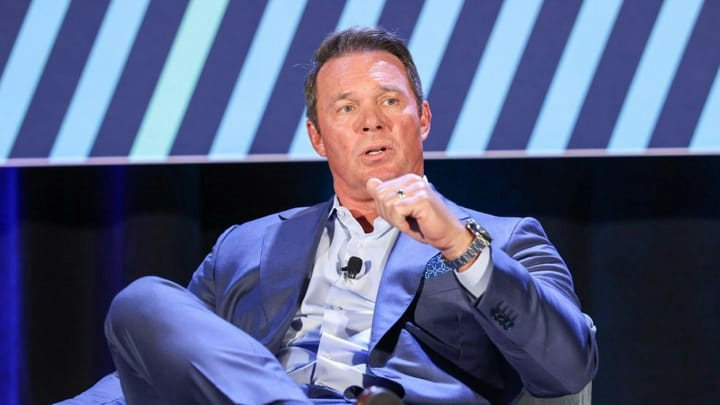
During a session at last week’s CREATE event at Terranea Resort in Rancho Palos Verdes, California, Boatwright talked about his mentors, including Paul Brown, CEO and founder of Arby’s parent Inspire Brands, and Chipotle Founder Steve Ells, and how they helped shape his philosophy as a leader. That philosophy includes making adjustments as needed, which has become critical as Chipotle recovers from its first year of same-store sales declines in over 20 years.
2025 "was a great learning year for our brand. We redesigned our strategy. We brought in some new leaders to really help accelerate what I believe to be the next evolution of growth for Chipotle Mexican Grill,” he told Nation’s Restaurant News’ Editor-in-Chief Sam Oches. Those new leaders include industry veteran Fernando Machado, who was named chief brand officer in April, and Arlie Sisson, named chief digital officer to accelerate its technology and innovation efforts.
Adapting to consumer changes
Now the company is figuring out its position amid a heavy value environment and a quickly changing consumer set. Boatwright likened the work to the duck-on-water analogy. “It looks very still but battling like crazy beneath the water.”
“We were not delivering on the same restaurant sales component, and trying to figure out, is this something cyclical and transitory, or is this something more permanent and a shift in consumer behavior that we needed to chase down? It ended up being the latter, and that required a new focus on a new strategy, but also new mind shift and new thinking in the support centers on how we show up for our customers,” he said.
That meant making adjustments to its digital commerce platform, media and messaging, value proposition, the in-restaurant experience, menu, and more.
“Everything needs to be really sharply in focus, and we need to innovate and make some really bold moves,” he said.
Chipotle updated its loyalty program, for instance, and began experimenting with AI-driven search placements. It stepped up its product launches to include things like more sauces and dips, and a protein menu. It began testing a happy hour with lower pricing from 2 to 5 p.
m. Though there were plenty of headlines about Chipotle’s same-store sales and traffic pressures, Boatwright kept the company focused on these adjustments while maintaining the ethos of what makes the brand special. It’s a hard balance, but it’s one he executes by keeping Chipotle’s North Star and Ells’ vision of “Food With Integrity” in mind.
“At the end of the day, I’m focused on building the type of company I can be proud of for the long term,” he said. “If we start move around or change our strategy based on investor expectations quarter to quarter, you could wind up with something that you never intended it to be, or you could end up destroying a great brand long term because you've made some short-term decisions about how you should proceed. I have a deep level of commitment and responsibility to maintain what is unique and special about the Chipotle brand.”
Perhaps the biggest challenge that comes with such a responsibility is learning how to play in the current value and inflationary environment. Solutions haven’t necessarily been falling off trees, but Boatwright cautioned operators to tread lightly when it comes to cost optimization.
“There are people who ask me if I would not lean into this idea of food with integrity to cut cost or improve margin. Not on my watch,” he said. “We know that at the end of the day, fresh food just tastes better. Oftentimes, brands get into this cost-control culture, and they really wreck a great brand moving forward.
“I would encourage you, as entrepreneurs building businesses today, invest with a growth mindset. Invest in the best ingredients you can find. Invest in abundance. Don't shortchange the consumer. Don't get into cost management. You can ruin something beautiful right from the start and never get it off the ground. Or you can get to a situation down the road when you're in hundreds or thousands of restaurants, and the gravity pulls you towards cost optimization. Brands that make that mistake, I've watched them fail time and time again.”
Boatwright also advised operators to worry less about their competition and instead focus on “what you do best.”
“Don’t get so myopically focused on what everyone else is doing,” he said. “Execution will always win the day. Just do what you do and do it exceptionally well. Do it unapologetically.”
In this story
This story was originally published by Alicia Kelso in Nation's Restaurant News on July 28, 2026. Burnaze summarizes and links to the original reporting.
Read the full story at Nation's Restaurant NewsLiked this? Get the week's franchise news, explained
- Sunday 8 AM ET weekly + a monthly deep dive
- Sections picked for the industries you follow
- Every claim linked to its source. Free.