TL;DR
Burger King is restructuring its footprint by acquiring and remodeling over 1,000 corporate locations to re-franchise them to local operator groups. The brand believes restaurants perform best when operated by local owners who understand their communities and take a hands-on approach.
Local leadership is bringing sharper execution and stronger restaurant culture.
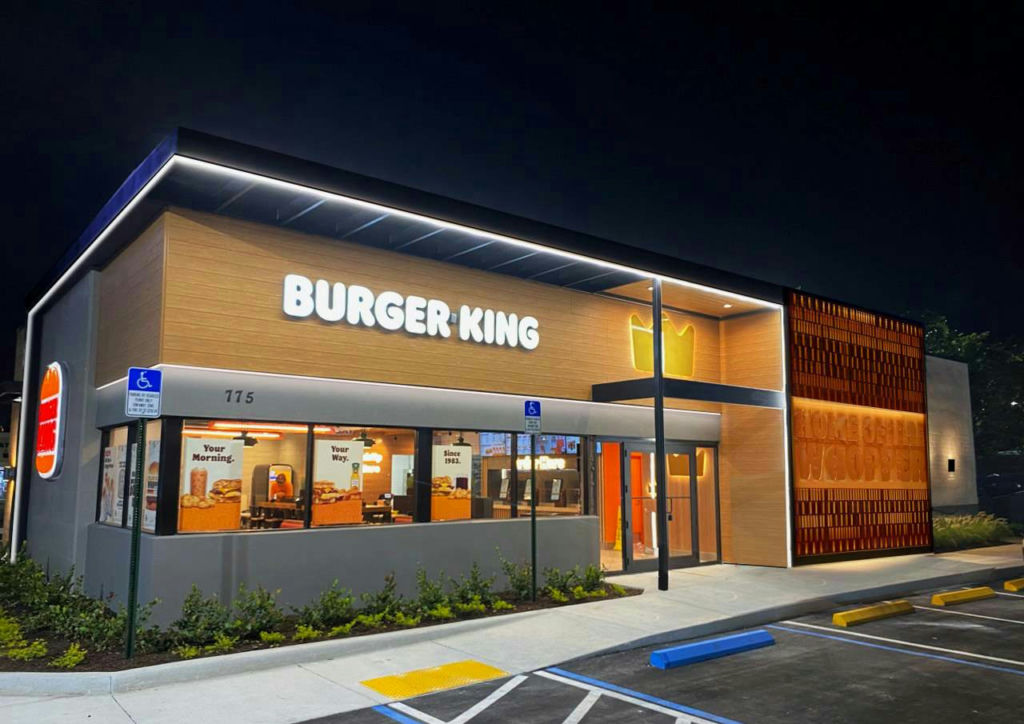
As one of the most recognizable names in quick service, Burger King believes restaurants perform best when they are operated by owners who live in their markets, are closest to the guest, understand their communities, and take a more hands-on approach to the business. Key to the brand’s long-term turnaround strategy, Burger King is in the middle of a major restructuring effort designed to return more restaurants to franchise ownership. In 2024, the brand acquired roughly 1,200 locations from its largest franchisee, and is in the midst of remodeling and transitioning them to local franchise operators ownership.
This is what drew former Burger King executives Eduardo Serafim and Willie Romeo to launch Nova Shores, a South Florida-based franchise group that now operates 33 Burger King restaurants. For Serafim, who previously led franchising and development for the brand, the move fulfilled a long-held entrepreneurial goal. “I always wanted to become an entrepreneur,” he says. “While leading franchising at Burger King, I saw firsthand the untapped potential of the brand and how franchisees could transform their lives and communities.”
Romeo, who also spent years with Burger King and was nearing retirement, saw the opportunity as a chance to build something lasting. Together, the two partnered to bring a more local, hands-on franchisee approach to the Florida market.
“At the end of the day, we’re in the people business,” Serafim says. “Even though it’s fast food, success is driven by the people. Local ownership brings operators closer to their teams and communities. They’re present in the restaurants, coaching employees, improving operations, and constantly elevating the guest experience. In a highly competitive industry, this level of engagement and accountability is a major advantage.”
Local presence also changes how decisions are made. “A local owner lives in the community and treats the restaurant like their own business,” Romeo says. “That creates consistency, stronger relationships and a deeper understanding of customers.” Serfim adds: “When ownership is purely financial, it’s easy to manage from a spreadsheet—and that’s a recipe for failure. Being local adds purpose and intention to every decision. Financials matter, but so does how we get there.”
A similar hands-on philosophy shapes Nova Shores’ leadership approach. “We focus on four pillars: people, training, processes, and culture,” Romeo says. “We invest heavily in succession planning, development, and alignment with Burger King systems. We emphasize high standards and leadership development. We want a team of high performers aligned around shared goals—what we call ‘one team, one dream.’”
For operators considering franchising, Serafim notes Burger King’s current evolution makes this a particularly compelling time to get involved. “Being a part of a turnaround for such an iconic brand is beyond exciting,” he says. “We serve thousands of people daily, and even small improvements can impact their day in a meaningful way.” Romeo agrees, adding: “Everyday we feel more proud of what we’re building—not just our business, but Burger King as a whole. Seeing the progress in restaurants and hearing from guests makes it incredibly rewarding.”
In this story
This story was originally published by Abby Winterburn in QSR Magazine on May 8, 2026. Burnaze summarizes and links to the original reporting.
Read the full story at QSR MagazineLiked this? Get the week's franchise news, explained
- Sunday 8 AM ET weekly + a monthly deep dive
- Sections picked for the industries you follow
- Every claim linked to its source. Free.