TL;DR
Sweetgreen's new salad-filled wrap sandwiches helped drive momentum for the chain in the second quarter, but a cyclospora outbreak has dampened consumer demand for freshly prepared food. The chain has downgraded its outlook for the year due to the outbreak, expecting same-store sales to be down between 8% to 7%.
Sweetgreen can’t seem to catch a break.
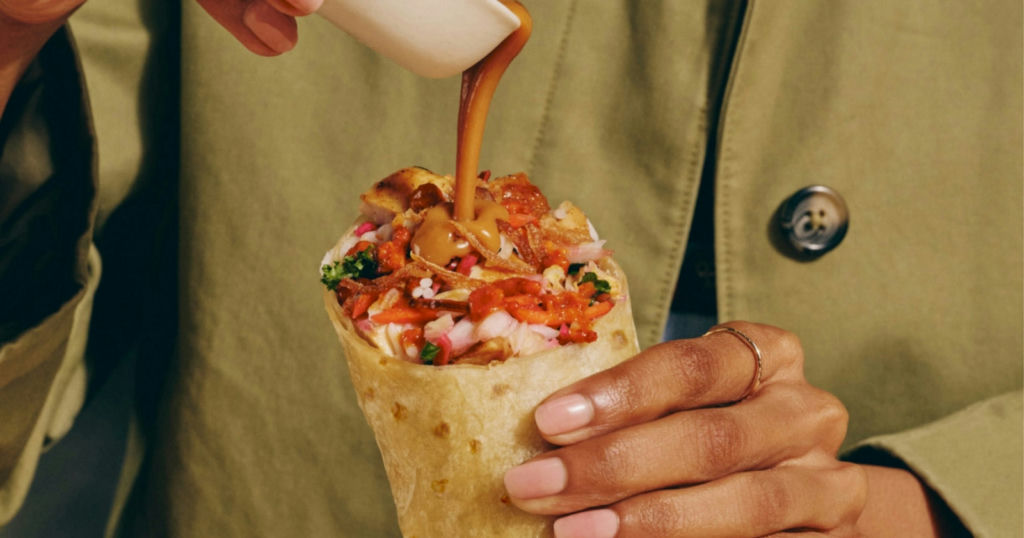
The fast-casual chain introduced the new line of salad-filled wrap sandwiches earlier this year, hoping it would help turn around same-store sales and traffic that plummeted to negative double-digits in the first quarter.
And it worked. Or at least it started to work.
Sales and unit growth
Sweetgreen’s new wraps helped drive momentum for the chain in the second quarter, turning sales trends in the right direction, though still negative. For the June 28-ended second quarter, same-store sales were down 6.2%, including a 2% decline in traffic and a 4.2% drop in product mix.
That was a significant improvement from the nearly 13% comparable-sales decline in the prior first quarter, which included an 11.2% drop in traffic.
The new wraps didn’t quite perform as well as they had in the market test. But they did have about a 20% incidence rate, and they increased frequency. More than half of guests who ordered them returned within 30 days, outperforming even the chain’s popular Harvest Bowl, said CEO Jonathan Neman on Thursday.
The value-priced wraps have appealed, in particular, to lower-income and younger consumers, he said. And they have improved the chain’s value perception — though they were introduced at a promotional price point that the chain moved away from in July.
A new wrap is coming to the menu next week, he noted, though no additional details were given.
Things were looking up.
Cyclospora outbreak impact
But then, the cyclospora outbreak hit.
Sweetgreen has not been implicated in the foodborne-illness outbreak that has killed two people and been linked to iceberg lettuce, though the exact source remains a mystery. Sweetgreen doesn’t even serve iceberg lettuce.
But Neman said the diarrhea-causing parasite in the headlines has dampened consumer demand for freshly prepared food.
Sweetgreen estimated the outbreak would have a 600 basis-point impact on same-store sales in July alone. The chain’s stock price fell more than 16% Thursday in after-hours trading to $4.91.
And this week brings another food-safety crisis in the news.
Salmonella is suspected in some fresh jalapenos, prompting a voluntary recall. Neman said Sweetgreen only uses fresh jalapenos in two dressings, but the chain has pulled the product from all stores out of an abundance of caution.
Because the pace and recovery of the food-safety issues are unknown, Sweetgreen downgraded its outlook for the year, saying same-store sales would be down between 8% to 7%, rather than the 4% to 2% decline expected for the year after the first quarter.
Turnaround efforts continue
Still, Neman was optimistic that Sweetgreen’s turnaround effort was taking hold and momentum will recover.
“We believe we have the right plan and clear priorities to return to transaction-led comps, get back to $3 million AUVs and expand margins over time,” he said.
Sweetgreen has been testing a new pricing architecture for its Create Your Own (CYO) bowl platform, including the protein cost in the base price, with more transparency for add-ons.
The test started in Indianapolis, and has been expanded to the Washington, D.C. area and Southern California.
“It’s a much simpler way to order CYO without the price shock,” said Neman, but it’s too early to tell how the move will impact frequency or transactions, he said.
Sweetgreen is also testing a new ordering tool, though specifics were not given.
And the chain is preparing to launch a test of restaurant-specific scheduling and deployment models that shift labor to peak periods and better reflect each restaurant’s sales volume and format.
For the wrap launch, Sweetgreen enlisted an army of social media micro influencers to raise awareness, and that strategy paid off, Neman said.
Now Sweetgreen is looking to do the same to build brand awareness more broadly. The second half of the year will bring a number of marketing events that will focus on storytelling, like the limited-time Alice Waters peach and goat cheese salad introduced in July.
“Our opportunity is not to reinvent the brand, but to make what is already distinctive about Sweetgreen more visible to more people,” said Neman.
Members help make our journalism possible. Become a Restaurant Business member today and unlock exclusive benefits, including unlimited access to all of our content. Sign up here.
Lisa Jennings is a veteran restaurant industry reporter and editor who covers the fast-casual sector, independent restaurants and emerging chain concepts.
In this story
This story was originally published in Restaurant Business on August 6, 2026. Burnaze summarizes and links to the original reporting.
Read the full story at Restaurant BusinessLiked this? Get the week's franchise news, explained
- Sunday 8 AM ET weekly + a monthly deep dive
- Sections picked for the industries you follow
- Every claim linked to its source. Free.