TL;DR
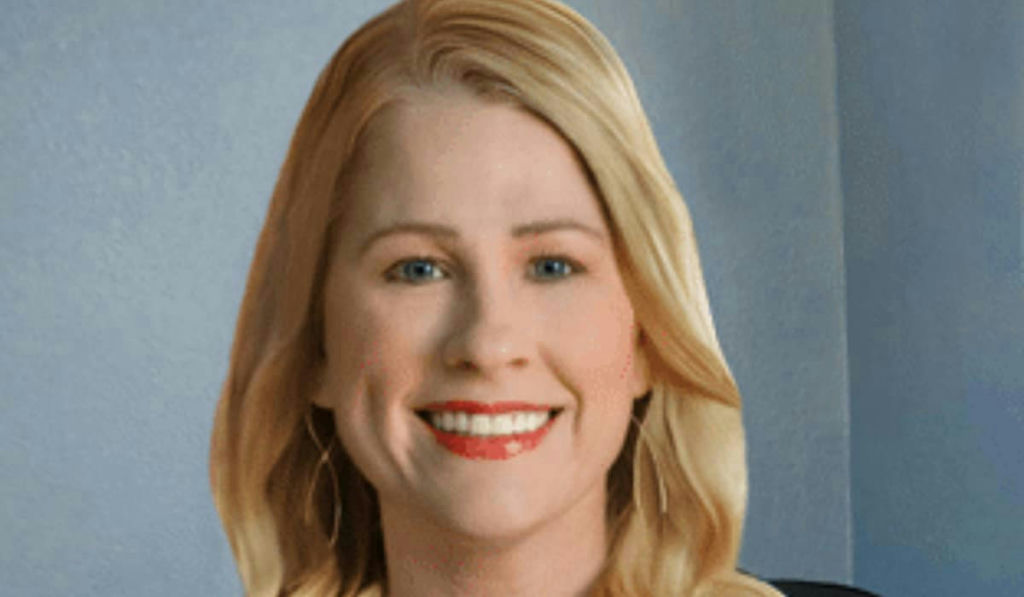
Kim Lewis, chief marketing and technology officer at Capriotti's Sandwich Shop, discusses her career path and experience developing custom AI tools for the quick-service restaurant brand. She shares her approach to AI innovation and leadership, emphasizing the importance of understanding the problem to be solved and using technology as a lever to drive business growth.
Kim Lewis didn’t follow the typical Silicon Valley tech trajectory. As chief marketing and technology officer at Capriotti’s Sandwich Shop, she’s pioneering digital solutions in quick-service restaurants—from early e-commerce and mobile ordering to custom AI tools trained on her own business instincts.
Throughout her career, Lewis has championed women in tech roles within QSR and proven that exciting technology careers exist far beyond the Bay Area. She’s built her leadership on a foundation of real-world operational thinking—a grounded and pragmatic approach.
In this exclusive WiRL Q&A with QSR magazine, Lewis answers 10 questions on her unconventional path to tech leadership, her disciplined approach to AI innovation, and what she wishes young women considering tech careers understood about building a career that matters.
Career Path
You’re a chief marketing and technology officer at a 50-year-old restaurant brand—not exactly the typical Silicon Valley origin story. How did you land in restaurant tech, and what made you stay? What drew you to QSR specifically?
I’ve always been a marketer with a passion for digital innovation. I started my career launching and growing email, loyalty, and e-commerce programs for retailers. In 2017, I moved into the restaurant industry to lead digital strategy at Sonic. It was a massive legacy brand, but they had a compelling vision that mobile ordering and digital acquisition would become central to growth.
What drew me to QSR—and what made me stay—is the tangible impact. I grew up loving the Sonic brand and was excited to bring my direct-to-consumer experience to a different industry. People have an incredible passion for food, and it is so rewarding to create experiences that become a part of our customers’ daily lives.
You’ve pioneered early e-commerce and mobile ordering throughout your career. What made you comfortable building in those gray areas? How do you think differently about new tech opportunities?
I’ve spent the majority of my career building new foundations inside legacy businesses. It has always been exciting for me to take something unfamiliar or underutilized within an organization and turn it into infrastructure and repeatable processes that can support growth.
I was comfortable in those gray areas because I was never just building campaigns; I was building capability. What made it even more compelling was the ability to measure it, personalize it, and shift marketing from an expense line to a proven profit engine.
When evaluating new tech opportunities today, I start with the customer and the problem we’re trying to solve, then use data to validate the path forward. If it’s not clearly improving the experience or driving the business forward, it’s not the right investment.
Modernizing a legacy brand is different from scaling a new tech product. What’s the biggest technical or cultural hurdle you’ve faced taking Capriotti’s into 2026? What surprised you most about the restaurant industry?
The biggest hurdle is that as brands grow, small exceptions accumulate. Over 50 years, you end up with different menu versions, unstandardized processes, and disconnected data sources. Individually, they are manageable, but collectively, they limit your growth.
Our biggest undertaking in 2025 was an end-to-end menu standardization across our 150-plus locations to increase scalability, speed, and consistency while also strengthening our value proposition through both portion enhancements and the introduction of an everyday value offering. It required aligning marketing, operations, IT, and franchise partners around a single path forward. It was a significant change for the brand that created immediate clarity and consistency across the system.
What surprised me most about the restaurant industry is the nuance of managing franchise systems. This additional level of required buy-in means that every decision must have an easy-to-understand benefit. However, operators rapidly adapt to new technology and programs once you clearly articulate the business outcome and remove unnecessary friction. Teams don’t resist technology; they resist unnecessary change and complexity.
AI Innovation
You built a custom AI bot trained on your own business instincts to help you lead. That’s audacious and specific. Walk me through that. What problem were you solving? And what does it actually do?
Audacious and specific—I love that description! The problem I wanted to solve was transforming the daily firehose of information into rapid strategic insights and clear action plans. As a leader, your scope expands, but your time does not.
I trained my custom bot on my specific voice, decision patterns, priorities, and business instincts. It synthesizes complex cross-functional data, drafts strategic plans and internal comms, and acts as a personal sounding board that aligns with my specific way of thinking. It has been a game-changer, helping me scale my impact and move with greater speed and clarity without losing my voice or leadership style.
There’s a lot of hype and fear around AI right now. How do you think about AI as a tool for better leadership versus AI as a shortcut? Where do you trust the bot, and where do you override it?
While well-implemented AI is certainly a huge time-saver, I don’t necessarily think of it as a shortcut. A shortcut bypasses the work or cuts corners; a tool amplifies your ability to do the work well.
I trust my AI bot to quickly synthesize data, identify key focus areas, and pressure test ideas. As I continue to provide more context and feedback, it gets better and better at giving me action-ready output. However, it can still be confidently wrong, so a firm understanding of your data and your business is critical. I will also absolutely override anything that is not in my authentic voice. Used intentionally, AI can sharpen judgment, but technology will never fully replace strong leadership. It only amplifies it for those willing to build the right foundations.
What do you wish you’d known earlier about working in tech? And what’s different now versus when you started?
I wish I had understood earlier that tech isn’t the job, it’s the lever. You can’t confuse tools with strategy. It’s about understanding how to use technology to move the business.
The technology leaders who create the most impact aren’t always the most technical. They’re the ones who can clearly define the problem, ask the right questions, and push for solutions that actually work in the real world. Being able to say, “What problem are we actually trying to solve?” or “Is this making the experience better or harder?” is often more powerful than knowing exactly how to build or code a system.
Early on, I had mentors who allowed me to sit in rooms that were bigger than my title and treated me as someone accountable for outcomes, not just tasks. Now, as a leader, I pay that forward through sponsorship, offering candid, constructive feedback, strengthening young women’s (and men’s!) thinking, and advocating for them when opportunities arise.
What’s different now is how integrated everything has become. If you’re accountable for growth, you’re accountable for the systems that support it.
Leadership Insights
You didn’t follow the traditional tech playbook—no Stanford, no startup incubator. How has that unconventional path actually been an advantage in your career? What did you learn outside the tech echo chamber that matters now?
Not growing up in the tech echo chamber forced me to anchor every initiative in a measurable business outcome. If a technology initiative doesn’t drive topline growth, improve unit economics, or simplify operations, we don’t move forward until we’re confident it will.
Because my background is in journalism, integrated marketing, and retail, I learned early on that building lasting brands requires both compelling storytelling and the right systems to support it. You cannot have one without the other. That grounded perspective keeps me focused on the operator and the guest, rather than just the technology itself.
Legacy brands have a culture and identity built over decades. As you modernize Capriotti’s technologically, how do you preserve what makes the brand special? How do you keep tech from becoming sterile?
We preserve the brand by remembering that the objective isn’t trend-chasing; it’s sustainable growth. Capriotti’s has been “Simply the Best Since 1976,” and we still slow-roast whole Butterball turkeys in-house daily and craft sandwiches to order. You can’t digitize that level of care.
Technology’s role is to remove friction around that core experience. We keep it from becoming sterile by being disciplined about where it shows up. If the guest notices the tech more than the food or the hospitality, we’ve missed the mark. The goal is simple: make everything around the experience easier so the experience itself can stay exceptional.
You’re operating at the intersection of QSR and tech. Does your unique perspective shape your approach to modernization? What conversations are you having in boardrooms that might be different?
Yes, I tend to approach modernization differently. A lot of conversations default to “what tool should we add?” Instead, I start with, “What are we actually trying to fix?” Without that clarity, you just end up layering complexity into the system.
Historically, marketing and tech have operated on separate tracks. I took on the technology function at Capriotti’s to bring those agendas together, and now we’re aligned around a single transformation roadmap for the brand.
The conversations I’m having are much more about simplifying, connecting, and making sure the technology actually works in the real world. If it doesn’t help our operators run a better business or create a better guest experience, it’s not progress.
What are you working on now that excites you? Where is Capriotti’s tech strategy heading?
What excites me most right now is moving from testing and learning into building systems that scale. We’ve made significant progress in unifying our customer data, which gives us a much clearer view of the guest.
The focus now is on making that data actionable in real time. Not just reporting on what happened, but using it to drive smarter decisions across marketing and operations every day. That’s what will allow us to operate with more clarity, move faster, and build a stronger system.
In this story
This story was originally published by Ben Coley in QSR Magazine on May 12, 2026. Burnaze summarizes and links to the original reporting.
Read the full story at QSR MagazineLiked this? Get the week's franchise news, explained
- Sunday 8 AM ET weekly + a monthly deep dive
- Sections picked for the industries you follow
- Every claim linked to its source. Free.