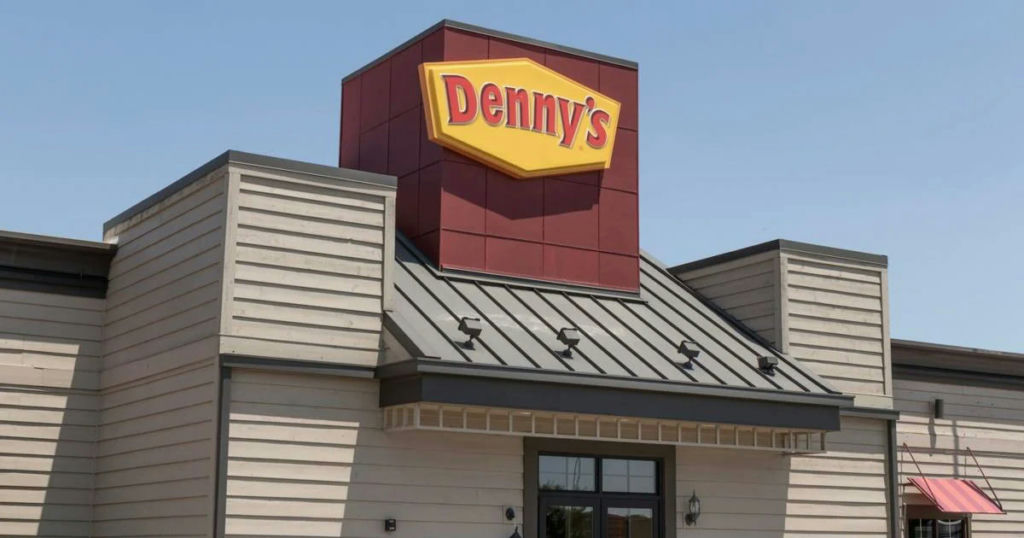
When Clyde Rucker considers purchasing a franchised restaurant in dire straits, he knows there’s a good chance the numbers may be worse than what’s presented up front.
Rucker Restaurant Holdings CEO Clyde Rucker said buyers need to expect several variable remodel costs when considering a purchase.
The CEO of Rucker Restaurant Holdings, an operating group with 51 Denny’s and 57 Jack in the Box locations across Florida and Texas, said both the sales, and the price tag to fix the store in question, are often inaccurate. Putting it simply, Rucker said when considering such a purchase, a buyer needs to be ready to spend.
The results, he added, are worth it. His point, made during a panel at the 2026 Restaurant Finance & Development Conference, was backed up by fellow speaker Roland Spongberg, founder and CEO of WKS Restaurant Group, a company with 382 units in 20 states with Denny’s, El Pollo Loco, Krispy Kreme and Wendy’s.
Their conversation, moderated by John Remakel, a shareholder with the law firm Monroe Moxness Berg, also included Guideboat Advisors managing director Jeb Ball, and centered on the process of purchasing distressed restaurants. It’s something Spongberg has been doing for more than three decades, and he said the units are usually in a tough position for three reasons.
“It could be operations, it could be the balance sheet with an inability to keep the restaurant in good shape and it could be a people issue,” Spongberg said. “When it’s happening in your brand or a brand you know about, it’s easy to recognize.”
What’s more difficult to recognize, Rucker said, are the unknowns, especially with remodels, which may need more work than initially projected. Plus, the franchisor will in many cases have needs to be met when a store changes ownership, adding expenses to the initial valuation.
“The franchisor will have minimum requirements,” Rucker said. “But the way we operate is we don’t want to do the minimum because we’re not going to get the maximum return. So, we typically go in assuming we’ve got to put in a significant amount of CapX in to make the improvements. It can be significant things, but it’s all baked into your purchase. You have to know the potential for a major remodel and factor those in.”
For a single restaurant, a remodel usually requires two to three weeks of construction, followed by another 30 to 45 days of stabilization. By 90 days, Rucker said the locations are often in good shape.
When purchasing a large group of failing locations, though, Spongberg said a buyer needs to be in it for the long-haul. A prime example he used was the purchase of 54 struggling Wendy’s restaurants in California with AUVs well below the company average, with the vast majority needing remodels.
“You can’t fix 54 Wendy’s in a short period of time,” Spongberg said. “We had to keep the people there. You can put one of your general managers in if it’s one store, but with 54, you can’t do that. You need to keep the people. So, we went through a process of developing a plan to remodel while also teaching the people how to operate. It wasn’t a short-term deal, it was years. But once we got the remodeling done, we had AUVs go from $1.5 million to $2.2 million.”
Roland Spongberg, founder and CEO of WKS Restaurant Group, said a purchase of more than 50 struggling Wendy's locations required a multi-year revival plan.
While the restaurants and their franchisees looking to sell are top of mind in the acquisitions, Ball said it’s just as important to be aware of the franchisor’s position. While Ball acknowledged the reasons Spongberg mentioned are common for struggling businesses, the franchisor should be given a close examination, too.
“Some brands that we’ve seen have had franchisees tumble into bankruptcy and they’re the same ones catching a lot of headlines,” Ball said. “There are problems that franchisees have that are the results of actions taken by the brand itself.”
When bankruptcy is a factor, Ball added those looking to make a purchase should know it’s going to be a court process on a very strict timeline. The benefit, he said, is the transparency.
Regardless of whether the restaurant in question is in a bankruptcy position Rucker said experience and effort go hand-in-hand with any turnaround push. For their acquisitions, Rucker said much of the rejuvenation strategy applied is based on similar existing locations in the portfolio. For that reason, he doesn’t recommend buying distressed restaurants as an entry point to becoming a franchisee.
“I’ve seen that movie from people who’ve taken over distressed properties, but I’ve also seen newcomers buy restaurants that are doing fairly well and they go the other way,” Rucker said. “You need the experience to make the business work. This isn’t an easy business development. You have to roll up your sleeves and get into the nuts and bolts of the business to not just make it viable, but improve along the way.”
The Restaurant Finance & Development Conference, put on by Franchise Times’ sibling publication Restaurant Finance Monitor, runs November 9-11 at the Wynn hotel in Las Vegas.
This story was originally published by Matthew Liedke in Franchise Times on November 11, 2026. Burnaze summarizes and links to the original reporting.
Read the full story at Franchise TimesLiked this? Get the week's franchise news, explained
- Sunday 8 AM ET weekly + a monthly deep dive
- Sections picked for the industries you follow
- Every claim linked to its source. Free.