TL;DR
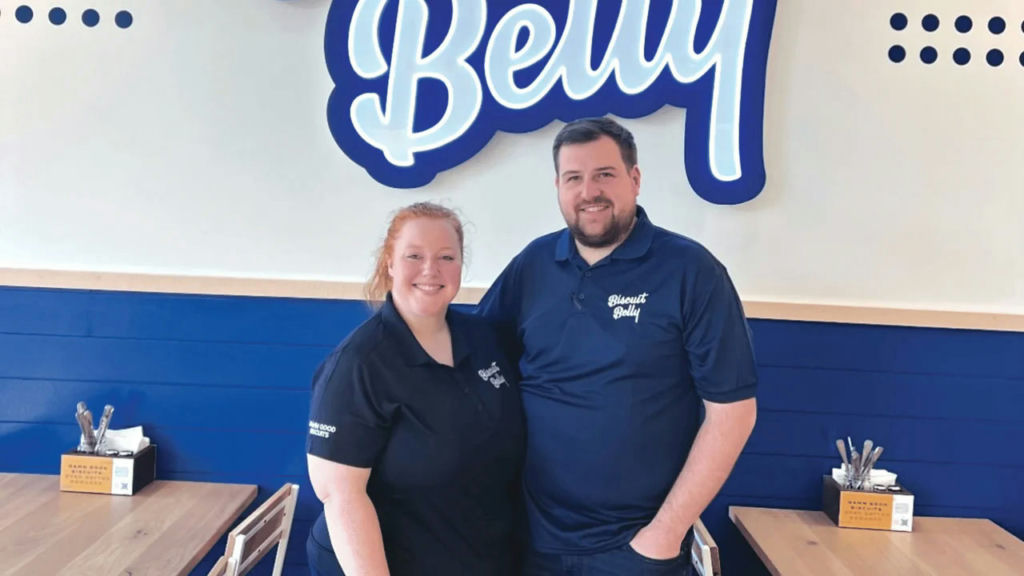
Andrew and Rachel Adams built a restaurant business through persistence and a concept that fit their lives, becoming early franchisees of Biscuit Belly. The couple was drawn to the brand's leadership and flexibility, and found ways to make the business their own within the franchise system.
For Andrew and Rachel Adams, the path to franchise ownership wasn’t exactly linear, but it was shaped by persistence, timing and a concept that fit their lives.
According to a recent article in Entrepreneur, the couple — who have known each other since preschool — always shared an interest in business ownership. After earning business degrees from the University of Alabama, they started their careers in banking before opening a DIY craft shop near Birmingham in 2019. The venture was short-lived, closing during the COVID-19 pandemic.
Andrew’s next step brought him back to a familiar environment: restaurants. While managing a local franchise location, he reconnected with an idea he had long considered.
“I would wait tables, cook, and wash dishes there,” he said of his grandparents’ restaurant. “I’d always talked about [owning] a restaurant, but Rachel always said no because of the time commitment.”
That concern ultimately shaped their next move. In 2020, Andrew was approached about becoming a franchisee with Biscuit Belly, a breakfast-and-lunch concept that offered a more balanced schedule than traditional all-day restaurants. For Rachel, that distinction made all the difference.
The couple signed on as early franchisees, drawn not only to the model but also to the brand's leadership. Rachel pointed to the authenticity and flexibility of Biscuit Belly co-founders Chad and Lauren Coulter as a key factor in their decision, noting that they felt less rigid than some franchise operators.
Even with that support, the transition into ownership came with challenges. For Andrew, the biggest adjustment was shifting from managing day-to-day operations to taking on broader financial and strategic responsibilities.
“One thing was taking off my manager hat and putting on an owner hat,” he said. “Owners have to worry about bills getting paid and more of the behind-the-scenes stuff that I didn’t necessarily have to do as a manager.”
The couple also found ways to make the business their own within the franchise system. Early on, they leaned heavily into catering, creating an additional revenue stream that helped balance slower weekday traffic and support staffing needs.
Their experience highlights a key dynamic in franchising: the balance between following a proven model and finding room to adapt. That balance for Andrew and Rachel Adams, along with a concept that aligned with their lifestyle, turned a long-standing goal into a sustainable business.
In this story
This story was originally published in 1851 Franchise on April 16, 2026. Burnaze summarizes and links to the original reporting.
Read the full story at 1851 FranchiseLiked this? Get the week's franchise news, explained
- Sunday 8 AM ET weekly + a monthly deep dive
- Sections picked for the industries you follow
- Every claim linked to its source. Free.