TL;DR
LeAnn Toth, a former executive vice president, left corporate America to own a Woodhouse Spa franchise in Naples, Florida, alongside her sister. Toth was driven by a desire for more control over her future and inspired by her entrepreneurial family.
LeAnn Toth, a former executive vice president in the software industry, made a life-changing decision to go into franchising after 25 years of climbing the corporate ladder. Driven by a desire for more control over her future and inspired by her entrepreneurial family, Toth transitioned from a high-stress corporate career to owning a Woodhouse Spa. Alongside her sister, Toth has built a thriving business in Naples, Florida, that not only provides a luxurious spa experience to its clients but also offers a fulfilling and flexible lifestyle for herself.
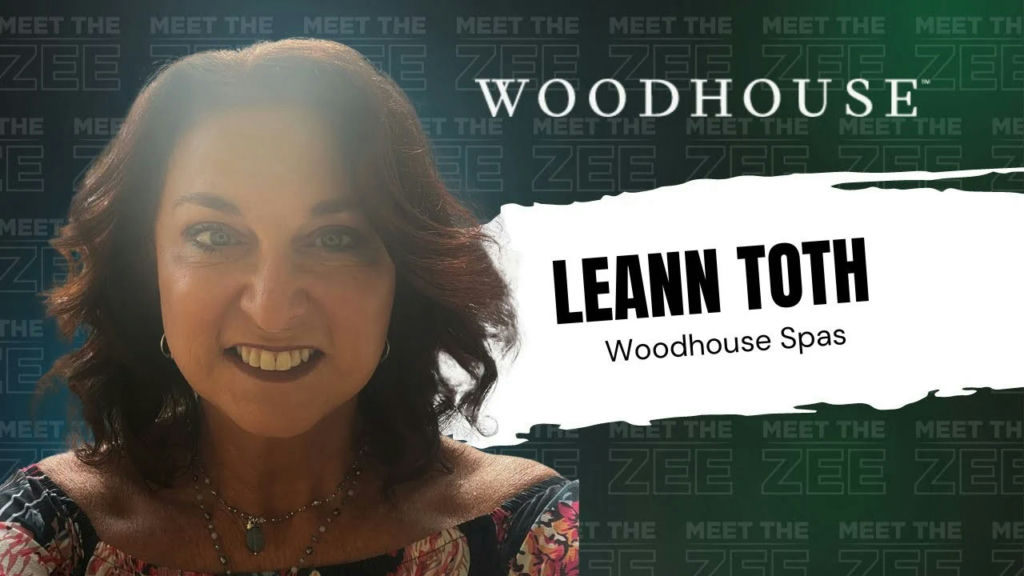
In a recent episode of “Meet the Zee,” Toth shares her story with Nick Powills, founder and publisher of 1851 Franchise, describing how she “accidentally” fell into franchising, the challenges and rewards of starting a business, and the importance of building a strong team culture. She discusses the careful considerations she made before leaving corporate America, the role her family played in her entrepreneurial journey and the strategic decisions that have led to her success as a franchise owner.
A summarized transcript of Toth’s interview with Powills has been included below. It has been edited for clarity, brevity, and style.
Nick Powills: So how did you accidentally fall into franchising? Take me back to before you accidentally said, this is what I’m going to do. What is your backstory?
LeAnn Toth: My backstory is from the time I was very young, I always dreamt of being in corporate America. I was on a college path, honestly, since first grade, because I wanted to go away to school. I wanted to work. At the time — I won’t tell you how long ago — but everyone in my age group wanted to move to Atlanta — we called it “Hotlanta” at the time” — or work in a skyscraper or New York City. I was on that path for a very long time, and I worked really hard to do that.
I was in the marketing arena. IBM was big, and all the software companies were sprouting up in the late 80s and early 90s, so I got a degree in information technology and married that with marketing. I ended up in the software company space. For 25 years, I worked up to become executive vice president. It was a dream come true. I got to travel the world, did a lot of public speaking and did everything I loved to do. It was great until it wasn’t. I grew out of it a little bit and grew restless.
I come from an entrepreneurial family. My father never understood how I put so many years of my life into somebody else’s company. He was always trying to get my sister and me to do something — open a sandwich shop, a yogurt store. He was always trying to get us to have our own business. I was way too scared. I was risk-averse. I was trying to build up my 401(k). I was risk-averse.
My sister, on the other hand, was a risk-taker. She went on a different path and became a massage therapist and esthetician. She helped people relax, and I was tight as a drum. I was in the high-stress world. The whole idea of owning my own business came from our father. After 25 years in corporate America, he got sick and still kept saying, “When are you going to finally get your own business?”
I remember saying I could probably do it because I had met some people who had opened a Subway and similar businesses. I said if I had a company behind me that already had all the operational things in place to take some of that risk away so that I wouldn’t be one of the 70% of companies that fail, I would do it. That’s where those seeds were planted — it was more about me being risk-averse but also starting to want to take on that entrepreneurial path as well.
Powills: So, you start thinking about franchising. How did you go from that thought process to buying a Woodhouse?
Toth: The Woodhouse came about because my sister, a massage therapist, worked for a Woodhouse day spa in Indiana. As an employee, she had no idea it was a franchise since they’re independently owned and operated differently. When she moved back to our hometown and we started discussing opening a business, our friends suggested we open a spa because we both loved spas but often had terrible experiences locally.
Diane said she’d only do it if it was modeled after the Woodhouse she worked at in Indiana. Being the type A that I am, I got on the internet, connected with the owner of the spa she worked for, and that’s when she first learned it was part of a franchise. She knew it was the best-run company she’d ever worked for as a therapist, and that’s how it all began.
Powills: I mean, that’s great. Did you look at other brands as a part of your process or were you like, Woodhouse is it?
Toth: Absolutely. Only because I had been a guest at that spa when my sister was a massage therapist, I knew it was exactly what I was looking for. We live in a high-end touristy area in Florida, and all the spas we would go to were in resorts. Diane and I thought, “How can we take that resort experience and bring it to the people who actually live in a resort area but don’t want to deal with going to a resort? They want to do it in their own neighborhood.” I was just passionate about it.
I didn’t have to look anywhere else only because she had worked there. And then, when I reached out to Woodhouse — within 24 hours of us having this conversation — I was on it. They reached out to me, and from that moment, the process was so impressive that I didn’t really look anywhere else, to be honest with you.
Powills: You worked your way up to executive VP, living out your dream. Were you thinking, “This is the top; they're not going to make me CEO”? Were you dealing with job politics and wondering if it was really worth it? Did you feel stuck, and was that the moment that opened you up to doing something different?
Toth: For me, the chink was that the CEO I reported to made it clear he'd always keep the company private, while others around me were heading to public companies. I knew I was stuck. By that time, I was in my 40s, and the companies going public were targeting younger talent, fresh out of college. I felt like I wasn't in the age group they were looking for, so I did feel stuck.
On top of that, I was making really good money, and when I met with Woodhouse, I realized it would take five years or more to build the business to match my income. There were a lot of things to consider before making the switch, but I was done with corporate America — the politics and moving around. I was living in Naples, Florida, and I didn't want to relocate. I was ready to stay put.
Powills: As an executive VP, you're evaluating every aspect of the business and considering what your pro forma will look like. But I imagine when you talk about income, it wasn't just about cash — it was also about happiness. You likely weighed the time it would take to build the business against the past 25 years of making money for others. Did you factor in happiness, living where you want, and the currency of life alongside traditional money in deciding whether you were comfortable with this decision?
Toth: It's interesting you say that because not too long ago, I started buying books on how to change your trajectory, and I even got a life coach. I was trying to figure out how to get out of corporate America, which I once loved, because I wanted a better quality of life. When I look back at my notes, I wanted more free time, more me time, and more flexibility. Those things were never going to happen in my corporate job.
You're right — it wasn't just financial. I had to weigh giving up that corporate job, with its security and benefits, but I reached a point where quality of life became more important than just income.
Powills: Why do you think corporate America misses out on recognizing and retaining people like you who hustle, care and are loyal by not offering flexibility before entrepreneurs decide to leave?
Toth: A hundred percent. I see it with my own adult children now — COVID changed a lot. Executives can work from home, and the mindset has shifted. It doesn't matter if you get the job done at 2 a.m. But when I was at this stage, about 12 years ago, it was still about clocking in and out. If you were on a business trip over the weekend, you were still expected to be there Monday morning. It was a different time for me, and that definitely weighed on my decision.
Powills: Where’s your head at now? Are you proud of what you’ve built? Are you thinking about scaling?
Toth: This has been the most amazing experience of my life. I'm so happy we did this. My sister and I became business partners, so I wasn’t alone — I liked having that support. I came at everything from an operational standpoint, focusing on building the right team, work environment and company culture. I managed the people, and with my sister’s legitimacy as a therapist, people wanted to work for us.
We worked hard, doing everything ourselves with our husbands helping out. We thought we’d be slow at first, but when we opened our doors, we hustled, put together a good marketing plan and were busy from the start. We won the award for being the first franchisee to have over a million dollars in revenue within the first 12 months for Woodhouse, which was especially impressive in a seasonal market like Naples.
We were also mindful of our financial decisions, paying off our SBA loan in three years, personal loans in four and being debt-free by year five. These decisions, guided by our core family values, ended up being smart business moves too.
Powills: That’s awesome. What’s the dream now? Are you going to, or do you want to scale? Are you happy with one?
Toth: We did want to scale and made a few attempts at opening multiple locations — that’s always the dream. When we first joined, Diane and I became regional developers for the Woodhouse brand, focusing on finding like-minded franchisees. We helped open locations in St. Pete and on the East Coast. I was passionate about helping others transition from corporate America to franchising because it made such a huge difference in my life.
However, Woodhouse changed direction and bought that piece of the business back, which altered my trajectory. We then focused on opening multiple units, but the market in Florida — with skyrocketing rents — made it tough to find the right fit. Now, we’re open to selling the business, possibly to an existing franchisee or one of our team members. Even if we sell, we’d love to keep a connection with Woodhouse — we love the brand and the business.
Powills: When Woodhouse sees this, they should consider you for their franchise growth team—you clearly know what you're doing. Also, the true beauty of franchising, which is underrated, is the value of resale. It shows the protection of the business, the transition of assets, and the infusion of new blood. It’s the whole life cycle of why you get into business in the first place.
Toth: I’ve noticed over the last 12 to 18 months within Woodhouse that many resales have been to other Woodhouse franchisees. I think that’s a great sign. It’s nice to see franchisees buying from each other within the brand. If my sister and I end up selling, it’s only because of where we’re at in our lives, with our husbands retiring and other priorities like learning golf.
Diane and I have always been hands-on owners, not absentee. We've kept a presence in the spa, but now our lives are in a different place, and I'm not sure we can continue as much as we used to.
Powills: The story I heard is three years to pay off the SBA loan, four years to be debt-free. Some people buy a franchise for passive income, but in my opinion, passive income doesn’t really exist in business — you still have to hustle. You put in the work and look at the return: you became debt-free, built a wealth generator and created an asset you can eventually exit from. That’s exactly how it should play out. Kudos to you — it’s a really cool story, and you’ve proven you know what you’re doing.
Toth: We’re now in year 11 or 12, and our spa director has been with us for a decade. We have very little turnover, and our team is strong. This summer, my sister and I both spent 30 days away from the spa, enjoying time with our families, and it worked really well. Now we're wondering if we really want to sell, because we’ve built such a strong team that gives us more freedom than we had in the early years.
Powills: The goal we set is to have the option to sell in three years, starting from the beginning of this year. That doesn’t mean we’ll sell, but we’re positioning the business so we can make that decision. If we can operationalize it to ensure predictable income, we might keep it going or consider acquiring. It’s about creating a milestone to reach that point.
Toth: And its options. If you go back to what I said, you know from the beginning I wanted flexibility, I wanted options. And I have that all sitting in front of me because of franchising.
In this story
This story was originally published in 1851 Franchise on November 12, 2024. Burnaze summarizes and links to the original reporting.
Read the full story at 1851 FranchiseLiked this? Get the week's franchise news, explained
- Sunday 8 AM ET weekly + a monthly deep dive
- Sections picked for the industries you follow
- Every claim linked to its source. Free.