TL;DR
Fogo De Chão CEO Barry McGowan credits his job at McDonald's for shaping his leadership philosophy, which emphasizes the importance of people and culture in driving business growth. Fogo De Chão achieved 13% sales growth in 2025 and targets $1 billion in systemwide revenue in the next two to three years.
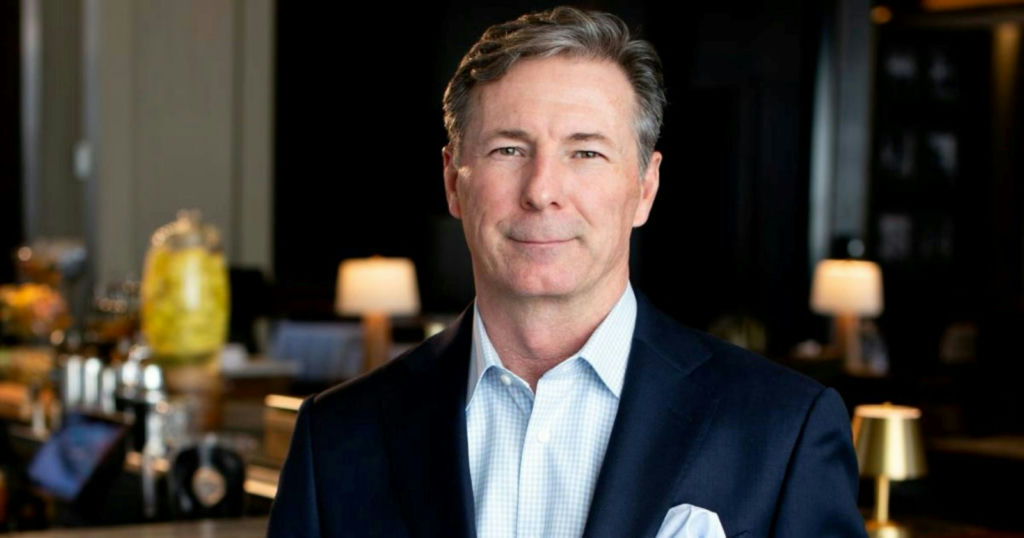
Barry McGowan is a restaurant industry case study, cutting his teeth in various back-of-house roles and working his way up through several operations positions at concepts like Chili’s and Macaroni Grill. In 2013, he was named president of Fogo De Chão. He took on the CEO role in 2019 and has been leading the global brand since.
His experienced began in the trenches. Shortly after moving to the United States from Germany, McGowan started working for his brother at a Pizza Hut restaurant when he was 14, washing dishes and prepping. He realized his brother wasn’t paying him, however, so he applied at a McDonald’s across the street and earned his first paycheck. That’s when the industry lured him in for good.
“I loved the eclectic group of people. Everybody seemed to get along. It just felt like family from the beginning,” he said during last week’s Restaurantology event in Salt Lake City, Utah, hosted by Savory Fund.
Leadership philosophy
McGowan said the McDonald’s owner-operator, Richard Dell, was not only a mentor, but a role model. When he came in for the job interview, Dell fed him before their discussion began.
“That operator understood who he was hiring, understood the community, the people he needed talent from,” he said. “Then all he did was train me, coach me, inspire me, and told me someday I can own my own McDonald's. I was very young at 16. I felt very confident I was going to be an operator, and that's why I stayed in the business.”
McGowan said the operator’s focus on the fundamentals, execution, and making a difference in his employees’ lives have helped craft his own leadership style.
“I remember the kid who had to ride to work on a bike or take a bus. Our mission is hiring people that other people won’t hire,” he said. “You make a real difference in this industry. Today we have over 10,000 team members globally and that’s what drives us. We’re a human capital-led business.”
Scaling culture
That human capital is what cultivates culture to win in an intense competition over market share, he added, and it’s critical to scale that culture alongside sales and unit count. This is particularly important as the industry goes through what he calls a “renaissance.” The companies at the “tip of the spear of that renaissance” are those with the right people and culture in place.
“Times are always tough, but how you respond to it, how you elevate the team, how you recover, learn from it — it’s exciting to really scale your culture,” he said. “Restaurants is the hardest business to do. You’ve got to work hard and then you’ve got to convince people every day — not just your customers, but your team members. What I love is when you do it right, you have real scalability."
In 2025, as the top 500 chains’ sales growth slowed to 3% in 2025, Fogo’s sales grew by 13%, according to Technomic data. In 2025, Fogo finished its fifth year of 15% year-over-year systemwide revenue growth and generated a record year of openings. The company also debuted in Asia and is preparing to open in Chile.
Fogo is a 47-year-old concept featuring the gaucho grilling technique of roasting meat slowly over an open fire pit. It was founded in Porto Alegre, Brazil, by brothers Arri and Jair Coser, along with brothers Aleixo and Jorge Ongaratto. It remains founder-led, which McGowan said is a big part of its success.
“I realized after growing up with big brands is that they go away once the soul of the brand disappears, and that soul usually is the founder mentality, the people who started it, and the people who stayed,” he said. “You’ve got to have a committed team that believes in the future."
McGowan said there are plenty of other differentiators driving Fogo's growth, including its menu with butter-bathed lobster, blistered fish, and salty bark — a trademarked name describing the intensely seasoned exterior crust that forms on fire-roasted meats. The chain also recently launched Fogo Rewards and introduced a digital concierge platform called Selma AI, named after Selma Oliveira, the brand’s first U.S. general manager and whom McGowan calls “the matriarch.”
Growth strategy
Still, it's people and culture will remain the company's North Star as it targets $1 billion in systemwide revenue in the next two to three years, from $736 million at the end of 2025.
“You have to start the tip of the spear back, not from the executive team down, and you've got to have high visibility to your talent pool,” he said. “These are the people who have been cultivated, who know our language and who we are. They’re ready for the next level.”
Fogo has three years of human capital visibility, he said, and two years of site visibility, so it intentionally doesn’t have sites picked out before it has the right people to support them.
“Culture is that important and you’ve got to speak it, reaffirm it, you’ve got to show up every day and live it. Define what matters to you, and invest in it every day,” McGowan said. “You cannot grow ahead of it. If you do, then you're going to dilute your culture pretty quickly.”
Members help make our journalism possible. Become a Restaurant Business member today and unlock exclusive benefits, including unlimited access to all of our content. Sign up here.
In this story
This story was originally published in Restaurant Business on October 1, 2026. Burnaze summarizes and links to the original reporting.
Read the full story at Restaurant BusinessLiked this? Get the week's franchise news, explained
- Sunday 8 AM ET weekly + a monthly deep dive
- Sections picked for the industries you follow
- Every claim linked to its source. Free.