TL;DR
Military installations offer new growth opportunities for restaurant franchises with established communities of service members and families.
For decades, restaurant franchise development has largely centered around a familiar set of real estate fundamentals: strong visibility, convenient access, favorable demographics, and high traffic counts. Those factors still matter, but as competition for quality sites continues, franchisors should be willing to broaden their definition of what makes a strong development opportunity. Military installations are a good example of that shift.
Military installations represent a distinct development opportunity, offering access to established communities of service members, civilian personnel, and families. These locations offer a built-in customer base, regular dining opportunities, and access to communities with limited restaurant options. When evaluating non-traditional opportunities, development teams should begin by understanding the venue’s built-in audience, its routines, and its dining needs.
Rather than applying traditional restaurant site criteria, the goal is to determine whether the concept is a strong fit for that specific environment. The lesson for franchisors extends well beyond military installations. Successful development today requires brands to think more creatively about where their customers are and how their concepts can meet them there.
Consumer‑first approach
Start with the consumer, not the prototype One of the most important shifts franchisors can make is moving away from a prototype-first mindset. Instead of beginning with a standard building and searching for places it will fit, development teams should first ask where their guests are and what they need from the brand. Military installations illustrate why that matters.
These are active communities with their own routines and dining needs. A successful restaurant needs to complement that environment rather than simply replicate what the brand operates elsewhere. That principle applies across non-traditional development.
Flexibility and adaptation
Whether evaluating a military base, airport, university, or another venue, franchisors need to understand how customers use the space and then determine how their concept can best fit within it. Flexibility has become a development advantage As franchisors look for new avenues for growth, flexibility is becoming increasingly important. Brands that can operate across different footprints and formats have more available opportunities than those who are dependent on one specific prototype.
That does not mean compromising the brand experience. It means identifying which elements are fundamental to the concept and where there is room to adapt. Layouts, ordering processes, equipment, and service models may look different depending on the venue.
Case study: Little Caesars
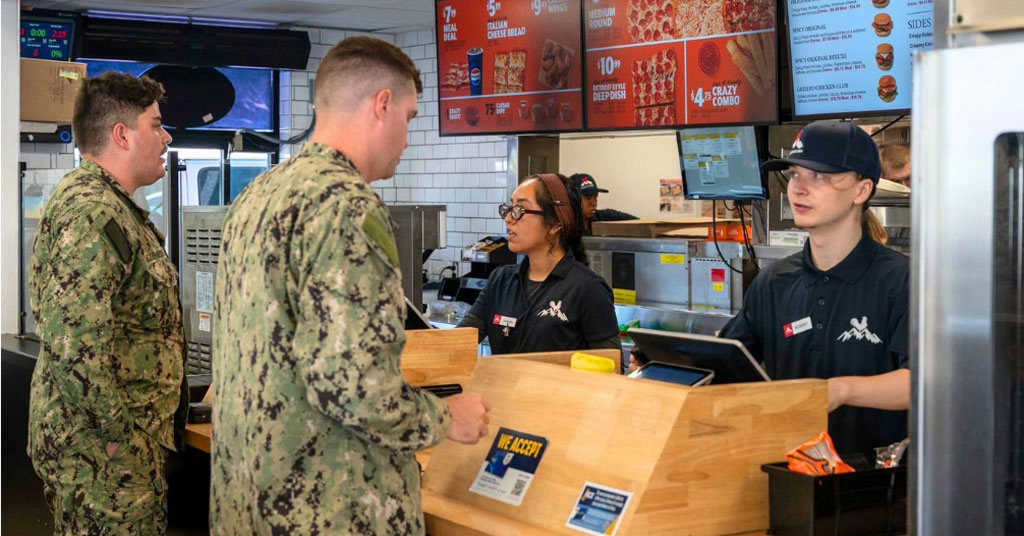
Little Caesars has seen the value of this approach through its continued military expansion, including recently announced plans for four additional Navy base locations across the U.S. These opportunities reinforce the importance of understanding each installation's unique requirements, working closely with experienced partners, and maintaining the quality, value, and convenience guests expect from the brand.
Relationship‑driven development
Relationships matter as much as real estate Non-traditional development also reinforces another important lesson: securing the space is only one piece of the equation. Military installations involve unique requirements, processes, and stakeholders. Franchisors need teams and partners who understand those nuances and are prepared to collaborate throughout the development process.
Franchisors create stronger opportunities when they understand the host venue's goals and find ways to support them. That relationship-driven approach can be applied across the non-traditional sector. Franchisors should view host organizations as long-term partners, not simply landlords.
On military installations specifically, that responsibility carries additional meaning. Restaurants become part of communities made up of service members and their families. Showing appreciation for those communities should go beyond opening the doors; it should be reflected in how the brand approaches the relationship and serves the people who rely on that location.
Evaluation framework
Evaluate non-traditional opportunities on their own terms The broader takeaway for franchisors is that non-traditional growth calls for its own evaluation process, separate from traditional restaurant site selection. Traditional restaurants remain a distinct and important part of a brand’s development strategy. Military installations and other non-traditional venues offer an additional channel, often with a captive audience and unique operating requirements.
The question is not whether a standard restaurant can fit the space, but whether the brand can serve that venue’s community effectively while maintaining its standards. Military-base development illustrates the value of that approach. By understanding the audience, planning for the venue’s requirements, and building strong partnerships, franchisors can pursue non-traditional growth opportunities with purpose.
This story was originally published by Sally Rampersad in Franchising.com on November 10, 2026. Burnaze summarizes and links to the original reporting.
Read the full story at Franchising.comLiked this? Get the week's franchise news, explained
- Sunday 8 AM ET weekly + a monthly deep dive
- Sections picked for the industries you follow
- Every claim linked to its source. Free.