TL;DR
McDonald's is testing drive-thru AI ordering, part of the fast-food sector's push toward a 100% digital operation, but 38% of consumers oppose this technology. The industry's focus on digital orders may compromise hospitality, a core principle of the fast-food sector.
A few weeks ago, when we got a peek at McDonald’s new prototype, we could not get our eyes off the front counter.
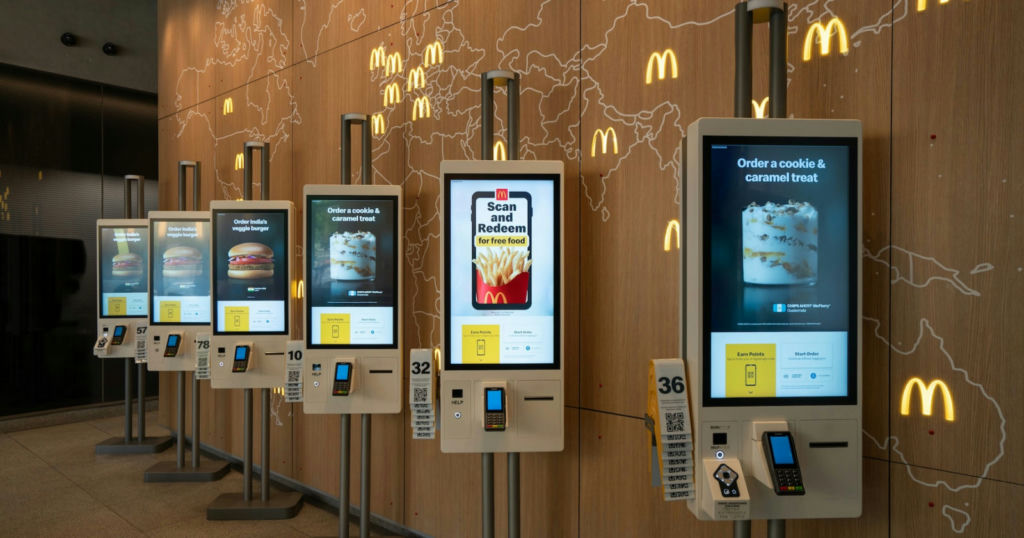
It was small. Tiny. Enough for, perhaps, one employee. The restaurant itself had an impressive array of options for consumers to get their food, including a double drive-thru, temperature-controlled pickup cubbies for mobile orders, and one outside for delivery drivers. There were also, of course, kiosks.
It was a clear demonstration of the fast-food sector’s near future, where going up to an actual person, looking at a menu, then stating your request is passé. It’s made even starker when you think about this: McDonald’s is testing, again, drive-thru AI ordering. In other words, the company may be just a few years away from a 100% digital operation.
There are good reasons for this. Mobile ordering, of course, has been a good thing in general, addressing a need and giving customers the ability to make their orders in advance, which makes takeout easier. As much as it’s created enormous headaches for operators, third-party delivery is clearly loved by consumers, who order through such apps despite the premium that comes with it.
Kiosks and drive-thru AI, meanwhile, encourage consumers to make larger orders, which increases average check.
It all just seems so soulless, however. In this big push toward an all-digital ordering environment, the fast-food sector is abandoning one of its core principles: hospitality.
We know this is a core principle because so many industry executives refer to their diners not as “customers” but as “guests,” as if they’re hotels. Yet hotels are far more advanced when it comes to technology and yet they all still employe old-fashioned human beings at their front desk to greet those guests when they come in.
Kiosks stand in dining areas almost like people replacements. Drive-thru AI order takers are public personifications of our worst fears on the technology, replacing what is a very human task, asking to take an order.
Consumers do not like drive-thru AI. According to Technomic, 38% of consumers said that voice AI in the drive-thru would make them visit a restaurant less, compared with 16% who said it would make them visit a restaurant more. Six in ten consumers, meanwhile, said they prefer ordering from staff rather than kiosks, though in fairness younger consumers are more likely to prefer such devices.
Customers may even like kiosks and drive-thru AI, but it can become a problem when they have a problem and want to ask a question.
The need driving much of this technology innovation, of course, is labor. The restaurant industry struggled for years coming out of the pandemic with a brutal labor shortage, and there’s a clear need for operators to get more efficient.
Many of these strategies are labor-saving devices, ultimately, enabling restaurants to shift more of their workers to the kitchens where they can make beverages and chicken sandwiches.
Chris Kempczinski, the CEO of McDonald’s, has argued that his chain can do both more technology and more hospitality, and the company plans to train its workers to do just that. But greeting customers when they order, either in the drive-thru or in the restaurants, is literally hospitality.
Companies cannot shift that much to digital orders and expect improved hospitality.
We often get pushback on drive-thru AI from those who believe that fast-food workers aren’t good enough to provide hospitality, and that robots greeting customers nicely provide a good experience. But workers not providing good service is a hiring and training problem, not a worker problem, and robots greeting customers isn’t hospitality, it’s software. Nobody has ever gushed about the wonderful service provided by automated tech support, for instance.
We’re not arguing that companies should abandon digital, not by a long shot. Companies can most certainly have plenty of technology infused throughout their business while still providing the service customers want.
The most successful chains today are known for their service, including brands like 7 Brew and Dutch Bros that have people taking orders in the drive-thru, or Culver’s, which has people taking food to tables, or Chick-fil-A, whose workers say “my pleasure.”
One of my biggest takeaways from recent quarters comes from Starbucks, which still has a hefty mobile order business but focused on customers who come into its shops, because even to-go customers like to get their lattes from a place they admire.
Technology is great for restaurants. But the concept of 100% digital orders should go away.
In this story
This story was originally published in Restaurant Business on August 20, 2026. Burnaze summarizes and links to the original reporting.
Read the full story at Restaurant BusinessLiked this? Get the week's franchise news, explained
- Sunday 8 AM ET weekly + a monthly deep dive
- Sections picked for the industries you follow
- Every claim linked to its source. Free.