TL;DR
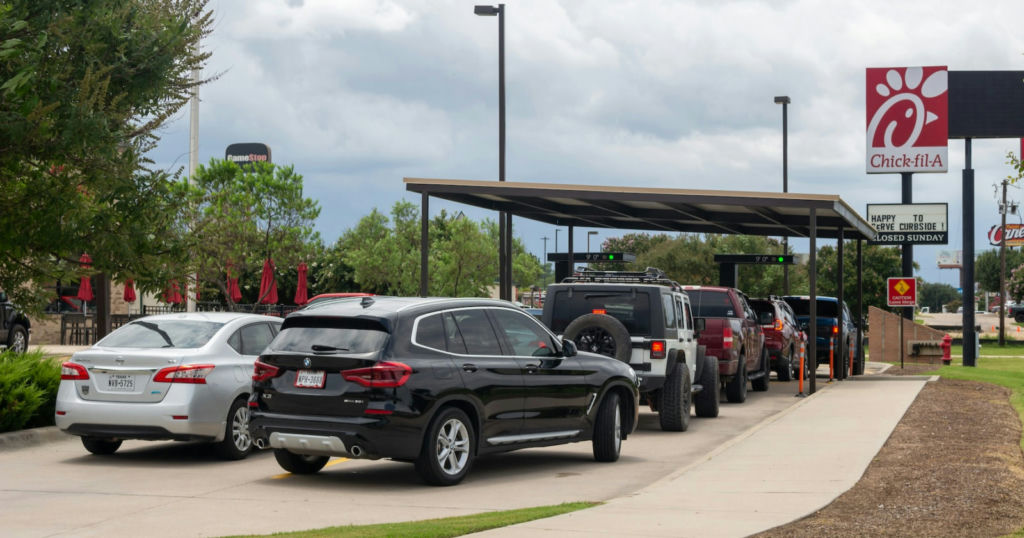
Chick-fil-A's CEO, Andrew Cathy, stated that the chain will not use AI in its drive-thrus, prioritizing human hospitality over technological advancements. This decision is in line with the chain's emphasis on providing exceptional customer service, a key aspect of its business model.
Drive-thru AI remains a major goal for a number of fast-food chains, including two of the four biggest in McDonald’s and Taco Bell. Plenty of industry executives and operators would love to see the technology advance to the point where a robot is the one greeting customers at the drive-thru speaker.
Do not, apparently, include Chick-fil-A’s CEO in that group. Andrew Cathy, the CEO of the chicken-sandwich chain, told CNBC that its restaurants will not use AI in its drive-thrus. “From our experience,” he said, “we really want that hospitality to be human to human.”
This is the right move. Chick-fil-A has long emphasized hospitality inside its restaurants. No matter how good AI may get in the future, at the end of the day it is still a robot programmed or directed to provide good service. And that is not the same as a human providing that service.
Going away from that, and substituting the human order taker for a robot, would go against what has been a fundamental tenet of the Chick-fil-A system, that its workers provide an unusual level of hospitality. They greet customers warmly and say things like “my pleasure” that other brands don’t do.
To be sure, Chick-fil-A is not the only chain opting against drive-thru AI. Burger King, for instance, said at the FSTEC conference that it is pumping the brakes on drive-thru AI, largely because a number of consumers don’t like it.
Consumers do not like drive-thru AI compared with other ordering channels. According to Restaurant Business sibling company Technomic, 38% of consumers say AI-voiced and AI-powered menu boards would make them visit a restaurant less often, and only 16% said they would visit more often.
That makes it one of the least accepted technologies in the drive-thru.
Restaurant chains love the concept of drive-thru AI because it could potentially save on labor. At McDonald’s, the technology is a potentially major piece of its “Next” strategy, one that it says could save 50 hours in labor a week.
(We give McDonald’s credit, because it is the only company actually willing to say that, while most companies will provide some sort of comment that AI “allows workers to spend more time with customers,” as if taking someone’s order isn’t interacting with customers.)
But the fact is, that still makes the technology a visible replacement for humans, and that is bad PR for an industry that doesn’t need such things right now.
Drive-thru AI might be able to convince users to buy more and it may well save on labor. But the industry is saturated. Supply of fast-food restaurants exceeds demand, so there are plenty of concepts out there that customers can go to if they don’t like what they’re presented with at a restaurant chain.
Customers, in other words, may opt not to go to restaurants with robot order-takers. And there will be plenty of brands to greet them with human beings, such as the burger chain Culver’s or drive-thru drink concepts 7 Brew and Dutch Bros.
Chick-fil-A’s business model has enabled an enormous level of growth and incredible throughput at its existing locations. Its average-unit volumes are among the highest in the fast-food industry, and only Portillo’s does more. But Chick-fil-A’s stand-alone units do more than $9 million in sales per year.
Why would it need robots to do more of the work?
In this story
This story was originally published in Restaurant Business on October 7, 2026. Burnaze summarizes and links to the original reporting.
Read the full story at Restaurant BusinessLiked this? Get the week's franchise news, explained
- Sunday 8 AM ET weekly + a monthly deep dive
- Sections picked for the industries you follow
- Every claim linked to its source. Free.