TL;DR
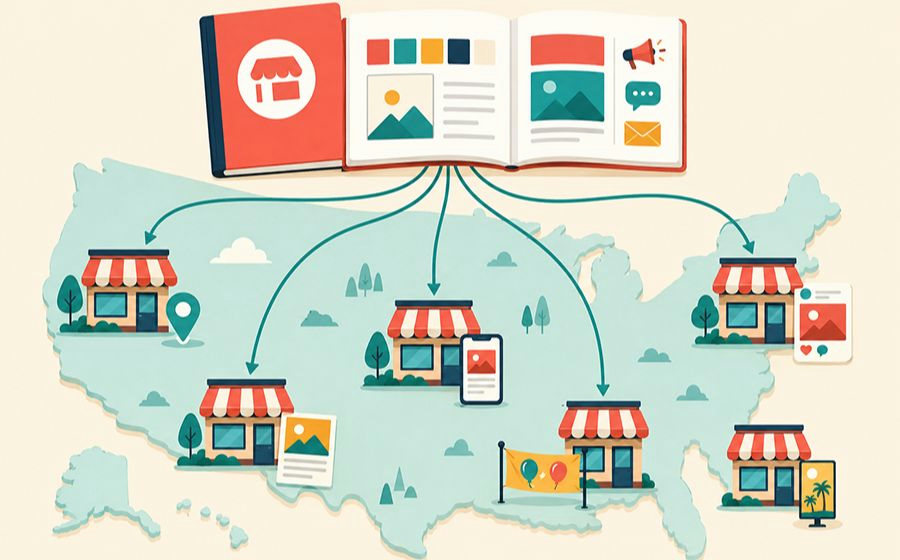
High-performing multi-location brands are 34% more likely to utilize a dedicated local marketing strategy to balance brand consistency with neighborhood-level engagement. About 94% of these brands have a dedicated local marketing strategy, which helps to protect the brand legally and visually while giving room to adapt to local communities.
Corporate teams launch polished national campaigns. Meanwhile, a franchisee in Tulsa is running a Facebook ad that opens with “Stop by after you grab coffee at Sue’s down the street.” Different worlds, same brand.
Local marketing strategy
About 94% of high-performing multi-location brands have a dedicated local marketing strategy — compared to just 60% of brands whose marketing met or fell short of expectations. Local strategy isn’t a side project for the brands that grow fastest. It’s part of how they grow.
But corporate has its own problem to solve: keeping the brand consistent across hundreds of locations. Franchisees have theirs: connecting with the people in their actual neighborhood. When those two needs aren’t designed to work together, brands get mixed signals to customers, weaker brand equity, and franchisees who quietly stop using corporate materials.
The fix is building a system where both can win.
Rigid templates are one of the fastest ways to discourage franchisee adoption of corporate marketing materials. They’ll open the file, scan it for thirty seconds, decide it won’t fly in their market and go back to whatever they were doing before.
Creating guidelines that protect what matters while giving room to adapt works better. Logos, colors, and core taglines stay consistent. But the messaging around local events, community partnerships and regional promotions should flex.
Brand consistency guidelines
Lock down the elements that protect the brand legally and visually:
Logo and color palette
Core brand voice and tone
Product or service descriptions
Any legal disclaimers and compliance language
The following elements should remain flexible enough to reflect local communities:
Local events and sponsorships
Stories about community involvement
Highlights of services that perform well in that region
Offers tied to the neighborhood (back-to-school, holiday parades, county fairs)
Franchisee support and feedback
Handing franchisees a PDF of rules isn’t enough. Providing clear examples of effective local adaptation tends to produce stronger adoption. A side-by-side of three real Facebook posts — one that nails the brand-plus-local balance, one that reads as corporate dropped it in, one that drifted too far off-brand — teaches more in 30 seconds than a 12-page guide ever will.
Franchisees don’t have time to create marketing materials from scratch. Most don’t have the skills either. They need ready-to-use assets they can customize quickly.
Build templates for the channels franchisees actually use:
Social media — Pre-written posts with fill-in fields for location-specific details, plus a few alternate captions so every post in the system doesn’t look identical.
Email — A monthly newsletter shell with national updates baked in and a section franchisees filled with local news, photos, or upcoming events.
Paid ads — Google and Meta ad templates with swappable headlines, images, and geo-targeted copy so franchisees aren’t writing ad copy from a blank page.
Print — Flyers, postcards and door hangers that hold up in a local promotion. A franchisee should be able to update the address, swap the offer and send it to print without calling corporate.
Where brands store this matters as much as what’s in it. A Dropbox folder labeled “Marketing Assets – FINAL v3” that nobody opens isn’t a content library — it’s a graveyard. Franchise marketing platforms, Canva team accounts or even well-organized shared drives that franchisees can actually navigate without a tutorial work better.
Update the library regularly. Seasonal campaigns, product launches and trending topics should get added monthly. If franchisees see fresh content, they’ll keep using it.
Most franchise messaging problems come from one-way communication. Corporate pushes materials down. Franchisees ignore them and do their own thing.
Building feedback loops that go both directions helps. When corporate launches a campaign, collecting input from franchisees about what’s working locally matters. Some markets might respond better to certain offers. Some messaging might fall flat in specific regions.
Monthly check-ins work well for this:
Corporate shares upcoming campaigns and messaging priorities
Franchisees report what’s resonating in their markets
Top-performing local tactics get shared system-wide
Underperforming campaigns get adjusted or scrapped
Outside of the monthly call, giving franchisees a place to talk to each other in real time helps. A Slack channel, a Teams group or even a private Facebook group works — whatever tool they already use. When a franchisee in Albuquerque figures out how to fill a slow Tuesday with a parent-and-kid promo, the other ten franchisees in similar markets shouldn’t have to figure it out from scratch.
Performance tracking and improvement
Brands can’t improve what they don’t measure. Tracking performance at both the national and local levels shows where alignment breaks down.
Brand awareness across all markets
Consistent messaging reach
Campaign performance averages
Customer sentiment about the brand
Individual location engagement rates
Local SEO rankings per market
Community event participation
Location-specific conversion rates
Watch for the franchisees who consistently outperform the system average and figure out why. Sometimes it’s because they’ve adapted corporate campaigns in clever ways. Sometimes it’s because they’ve quietly thrown corporate materials in the trash and built their own. Either case is worth knowing about — the first one means templates are flexible enough to win, and the second means templates aren’t doing what they need to.
If corporate campaigns bomb in specific regions, finding out why matters. Maybe the messaging doesn’t translate culturally. Maybe local competitors dominate that space. Adjusting instead of forcing it makes sense.
In this story
This story was originally published by Michelle Hummel in Franchise Wire on September 6, 2026. Burnaze summarizes and links to the original reporting.
Read the full story at Franchise WireLiked this? Get the week's franchise news, explained
- Sunday 8 AM ET weekly + a monthly deep dive
- Sections picked for the industries you follow
- Every claim linked to its source. Free.