TL;DR
Burger King's sales rose 7.6% in Q3, driven by remodels and menu improvements, contributing to Restaurant Brands International's (RBI) Q3 growth. RBI reported Q3 systemwide sales of nearly $13 billion, a 6.2% increase from the same quarter in 2025.
Remodeled restaurants and improvements to the Whopper and nuggets were joined by technology enhancements to help drive Burger King’s global 7.6 percent systemwide sales growth during the third quarter of 2026.
The burger giant, which was powered by an 8.4 percent increase in U.S. same-store sales during the quarter, also reclaimed its position as the No. 2 burger chain in the U.S. and surpassed 13,000 international locations during Q3.
Burger King officials said they expect similar results to continue as just 60 percent of stores have been modernized thus far through the “Reclaim the Flame” initiative.
Remodel impact
“I think about things like our remodels. We have done a lot of remodels; they’re going great,” said Josh Kobza, CEO of Burger King parent Restaurant Brands International, during the company’s quarterly earnings call Thursday. “We’ve got a number of years in front of us and a lot of stores that still need to get to the right image there. So I expect that will be a driver for quite some time.”
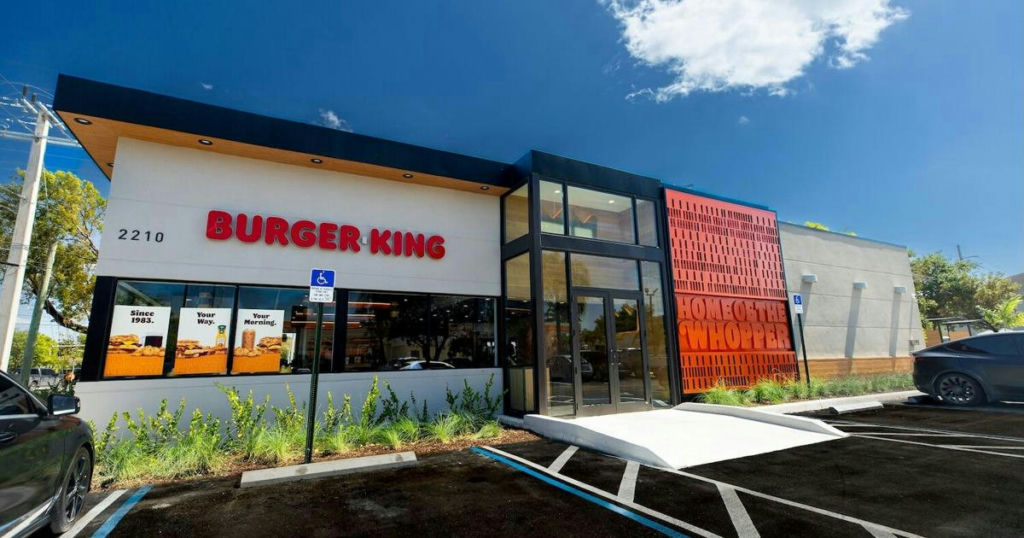
Burger King launched its “Reclaim the Flame” plans in late 2022 in an effort to drive sales. The initiative included major investments in advertising, technology, remodels and kitchen equipment and have grown since.
Restaurant remodels have been a significant driver of sales growth, and those updated to the “Sizzle” design with self-service touchscreen ordering, mobile pickup zones, streamlined kitchens and double drive-thrus are averaging around $2.2 million. Those remodels reportedly cost between $550,000 and $850,000.
The average unit volume at a traditional Burger King store in 2025 was $1.7 million, according to the company’s franchise disclosure document.
“The plans we’ve put in place over the last several years are working and we’re going to keep executing against them,” added Patrick Doyle, executive chairman, during the call. “Burger King has delivered over four years of industry outperformance, and now we’ve seen three consecutive quarters of truly exceptional results. We’re taking share, our franchisees are investing and the team continues to raise their standards.”
Chief Financial Officer Sami Siddiqui said the company expects to see the pace of remodeling pick up as the cost of beef, which has increased dramatically in recent years and been a headwind to profitability, is stabilizing.
“The good news is we’re starting to see a little bit of relief on that front,” he said. “We expect to see a little bit more next year, and I think that will naturally cause the pace of the remodels to pick up.”
RBI financials
Miami-based RBI, which also owns Tim Hortons, Popeyes and Firehouse Subs, reported Q3 systemwide sales just under $13 billion, an increase of 6.2 percent compared with the same quarter in 2025.
That includes a global systemwide sales increase of 9 percent for its international division. Comparable sales within that division increased 3.9 percent for the quarter, the 22nd consecutive positive quarter.
“I still think investors underestimate just how strong this business is,” Doyle said. “We have more than a dozen international businesses that are not only generating more than $100 million in annual system-wide sales, but also growing at double-digit rates. And they’re doing this with a healthy balance of same-store sales and new restaurant development.”
Doyle said 45 percent of international sales come from outside its 10 largest businesses and that there’s room for significant growth.
“Even in some of our most established markets, we’re nowhere near the number of restaurants we believe we can ultimately support,” he said.
Other brands performance
Tim Hortons reported 2 percent global systemwide sales growth for the quarter at $2 billion, with leadership crediting the launch of a matcha program for the growth. Its systemwide sales growth in Canada, the brand’s home market, was 1.8 percent.
“Not only does it appeal to younger guests, but over two-thirds of matcha beverages are sold in the PM daypart, helping us capture more demand where we’ve historically been under-indexed,” Kobza said, adding that those purchases often include other items.
Same-store sales at Popeyes decreased by 1.8 percent, though Kobza said efforts to improve the guest experience are “gaining traction.”
And Popeyes has seen significant growth internationally in recent years. That division surpassed 2,000 locations during Q3.
“Popeyes became part of Restaurant Brands International in 2017, and when you look at where international system sales are today, I think they’ve increased seven-fold,” Siddiqui said.
Same-store sales were up 1.5 percent and net restaurant growth of 7.8 percent drove systemwide sales growth of 8.3 percent at Firehouse Subs, which opened its 1,500th restaurant in North America and 200th in Canada during the quarter.
RBI officials also updated investors on efforts to refranchise corporate-owned units that are intended for divestment. Much of the Restaurant Holdings segment is made up of Burger King restaurants acquired through the $1 billion buyout of former franchisee Carrols Restaurant Group in 2024.
The company is renovating stores before seeking multiple smaller operators to buy most of the more than 1,000 restaurants across 23 states. Siddiqui said RBI has refranchised 135 locations, expects to sell “a couple hundred this year,” with the pace picking up next year. RBI intends to sunset the temporary Restaurant Holdings segment by the end of 2027.
In this story
This story was originally published by Andrew Tellijohn in Franchise Times on October 30, 2026. Burnaze summarizes and links to the original reporting.
Read the full story at Franchise TimesLiked this? Get the week's franchise news, explained
- Sunday 8 AM ET weekly + a monthly deep dive
- Sections picked for the industries you follow
- Every claim linked to its source. Free.