TL;DR
Burger King's US same-store sales rose 8.5% in Q2, outpacing the burger quick-service category. The brand's domestic comeback is attributed to improvements in operations, culinary, marketing, and franchisee health.
Four years of repairs at Burger King are producing clear evidence that the chain’s U.S. comeback has moved from promise to performance.
The brand’s domestic same-store sales rose 8.5 percent in the second quarter, outpacing the burger quick-service category by more than nine percentage points.
The result followed momentum in the first quarter and came during a difficult stretch for much of the restaurant industry. RBI executive chairman Patrick Doyle framed it as the accumulated return from work spanning restaurants, food, advertising, and the franchise base—not a sudden shift sparked by one promotion.
“One thing I’ve learned over the years is that businesses rarely change overnight. They change because thousands of people make thousands of better decisions every single day,” Doyle said during RBI’s Q2 earnings call. “That’s what’s happened at Burger King. The effects of better operations, better culinary, better marketing, better restaurants, better franchisees have been compounding for several years.”
Reclaim the flame strategy
Reclaim the Flame, launched in 2022, placed advertising, restaurant upgrades, operations, franchisee health, and the Whopper at the core of Burger King’s recovery. Those pieces are now working in concert. CEO Josh Kobza said operations have improved tremendously over the past three to four years, and Burger King recently tied for first among burger chains in the American Customer Satisfaction Index.
The brand opened 2026 by inviting customers to reconsider Burger King through its Whopper and brand elevation campaigns. Q2 extended that work through Whopper Wednesday and Whopper By You, which featured the Loaded Jalapeño Whopper. Whopper platform AUVs have climbed more than 20 percent since the elevation campaign began.
The chain paired that product work with its service elevation program, including the Your Way Champion and Whopper Guarantee. Each restaurant now has a Your Way Champion, a reimagined general manager role devoted to the guest experience. If a Whopper falls short of brand standards, the restaurant will remake it and provide the customer’s next one free.
Burger King also plans several menu upgrades through 2027. Kobza said the Whopper work represents only one installment, with another due within roughly a month of the earnings call.
“We really want to continue to upgrade and elevate the menu,” Kobza said. “You saw us do this with the Whopper at the beginning of this year. There’s still a lot of other parts of the menu that we think can be made even better.”
Menu and sales growth
Families supplied another growth lever. A Disney Mandalorian collaboration helped push average Kids Meal sales above 28 per restaurant per day in Q2, nearly 50 percent higher than in 2022. Even with that gain, sales sit well below historical Kids Meal volumes, leaving room for further recovery.
Value filled out the platform through the $5 Duos and $7 Trios, giving customers consistent entry points without requiring Burger King to lean on blanket discounting. Menu prices have grown by only low single digits, according to Kobza, despite record beef costs pressuring restaurant profit-and-loss statements.
CFO Sami Siddiqui said the sales mix has also been healthy, aided by more full-price Whopper purchases alongside the lower-priced bundles.
“Providing great value across the menu with the right mix is really the formula, and our franchisees are very supportive of that formula,” Siddiqui said. “I think they continue to buy in, and they’re seeing it in their P&Ls.”
Restaurant updates and franchisee support
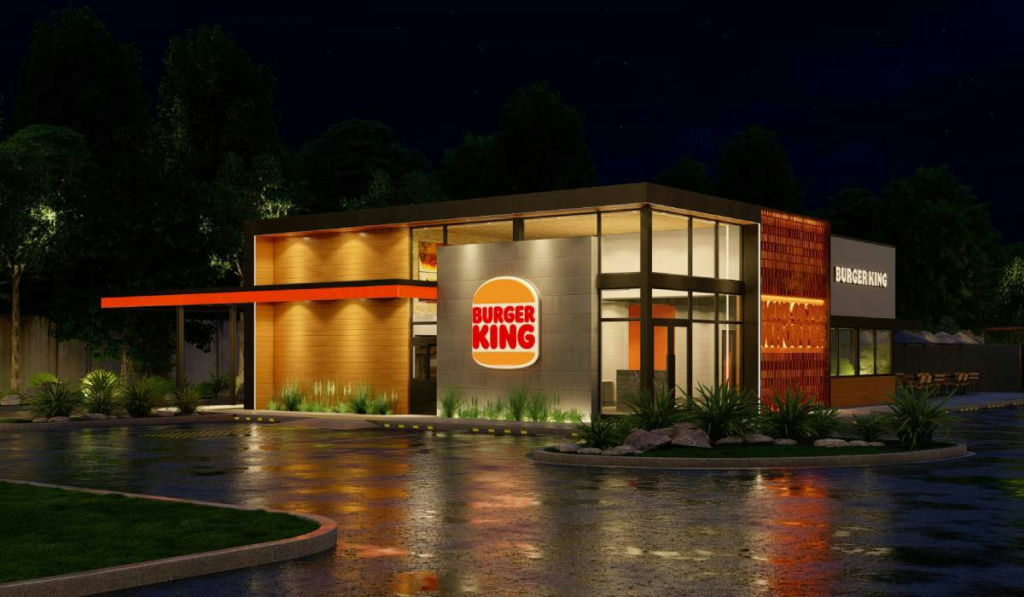
Restaurant image represents one of the largest unfinished pieces. Franchisees have invested more capital than RBI in updating the estate, Kobza said, but many locations still lack a modern image. He expects the remodel effort to provide a tailwind for several years as Burger King works toward a system in which nearly every U.S. restaurant carries the current look.
That investment also illustrates the shift in the franchisor-franchisee relationship, a major area of attention since Reclaim the Flame began. Store operators have committed their own dollars to remodels and adopted tighter operating standards. RBI, in turn, has funded brand initiatives and added support in the field. Kobza credited that alignment as a key force behind the improvement customers now see inside restaurants.
The sales acceleration could eventually quicken that work, though the impact may not appear immediately. Beef costs reached record levels in Q2 and delayed how much top-line growth reached franchisee profits. RBI expects some commodity relief, with a larger benefit possible in early 2027. Siddiqui said stronger 2026 profit-and-loss statements could encourage more remodel activity next year.
Meanwhile, the refranchising of Carrols Restaurant Group is moving sooner than RBI envisioned when it bought the large Burger King operator in 2024. The company originally expected sales to franchisees to begin three to seven years after closing the acquisition, but it started the process in late 2025.
Q2 refranchising moved more slowly than RBI anticipated. Still, the pool of potential buyers has more than doubled since the company’s investor day. RBI expects to refranchise a few hundred restaurants in 2026, sell the rest in 2027, and wind down its Restaurant Holdings segment by the end of that year.
Finding operators who can sustain the brand’s gains takes priority over completing deals on a rigid schedule. Kobza said he and Burger King U.S. and Canada president Tom Curtis have spent virtually every market visit during the past six to 12 months meeting new franchisees, current operators seeking more restaurants, or candidates considering a purchase.
Interest is coming from existing franchisees, outside operators, participants in the Crown Your Career program, Carrols personnel, and RBI corporate field employees. The intended destination is a system led by hands-on local operators with the resources and support to improve their restaurants.
“We’re seeing a lot of interest, and certainly as people externally see the momentum in this brand and how we’re performing versus the industry, even in this environment, we’re excited by the people who are coming and how they want to grow with us,” Doyle said.
In this story
This story was originally published by Ben Coley in QSR Magazine on August 7, 2026. Burnaze summarizes and links to the original reporting.
Read the full story at QSR MagazineLiked this? Get the week's franchise news, explained
- Sunday 8 AM ET weekly + a monthly deep dive
- Sections picked for the industries you follow
- Every claim linked to its source. Free.